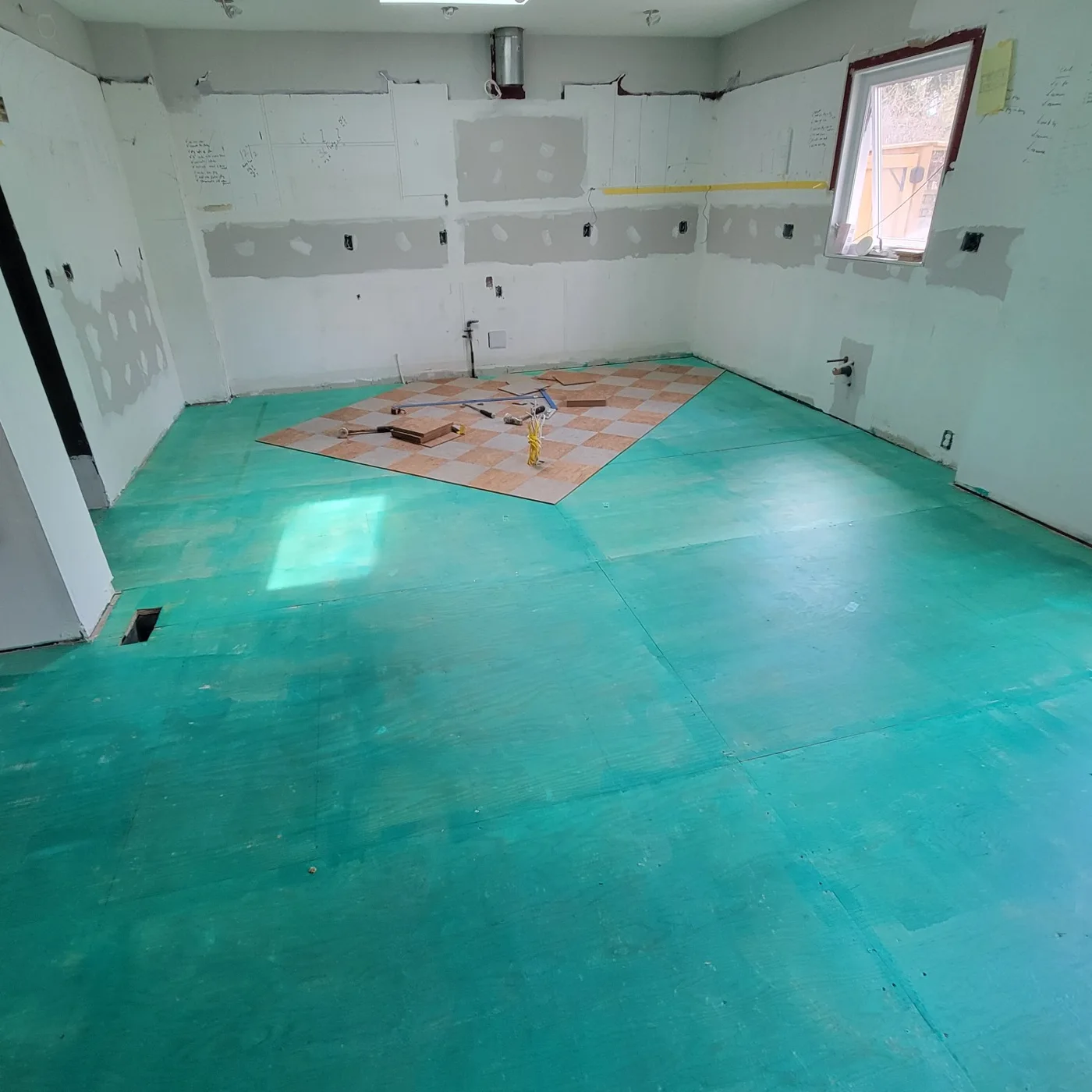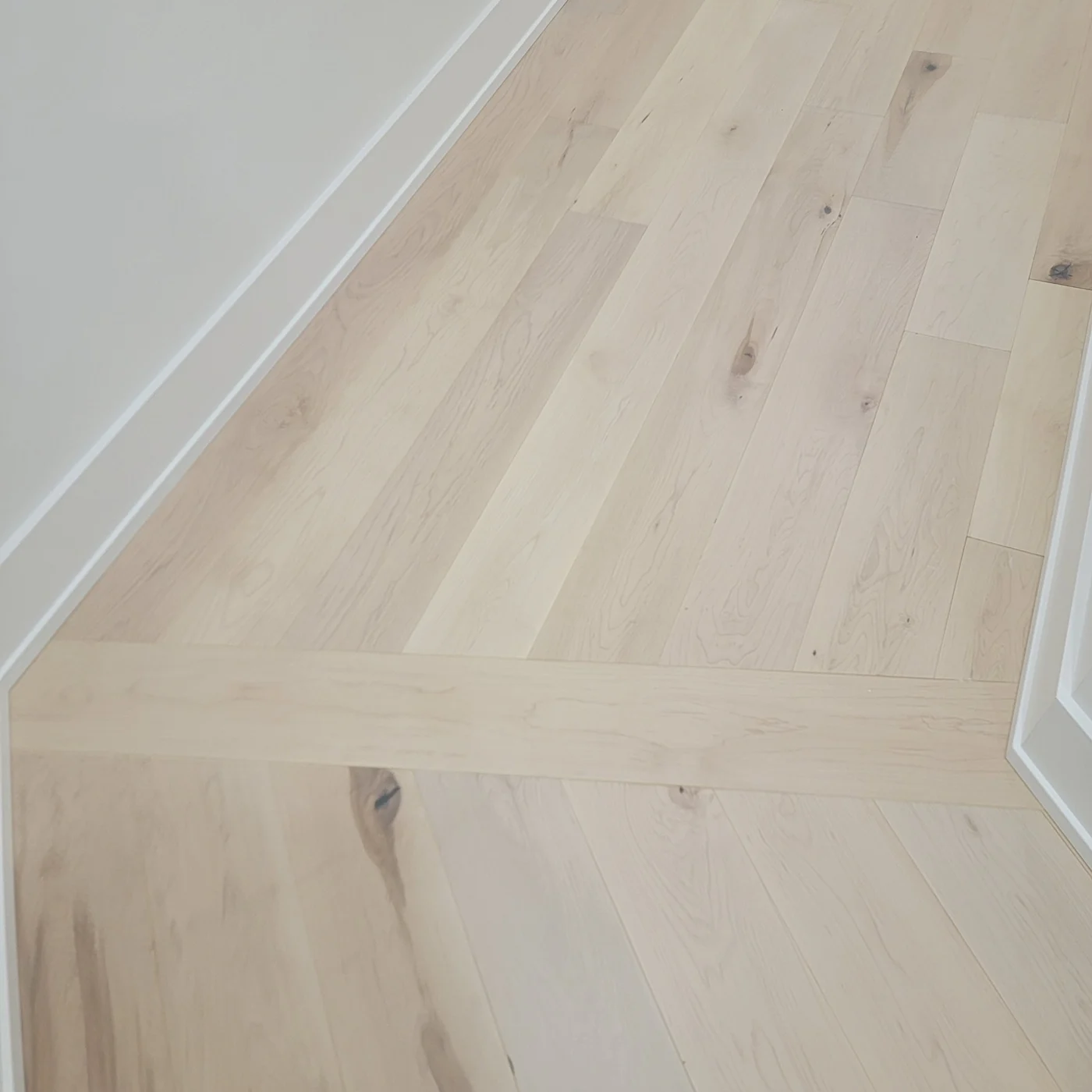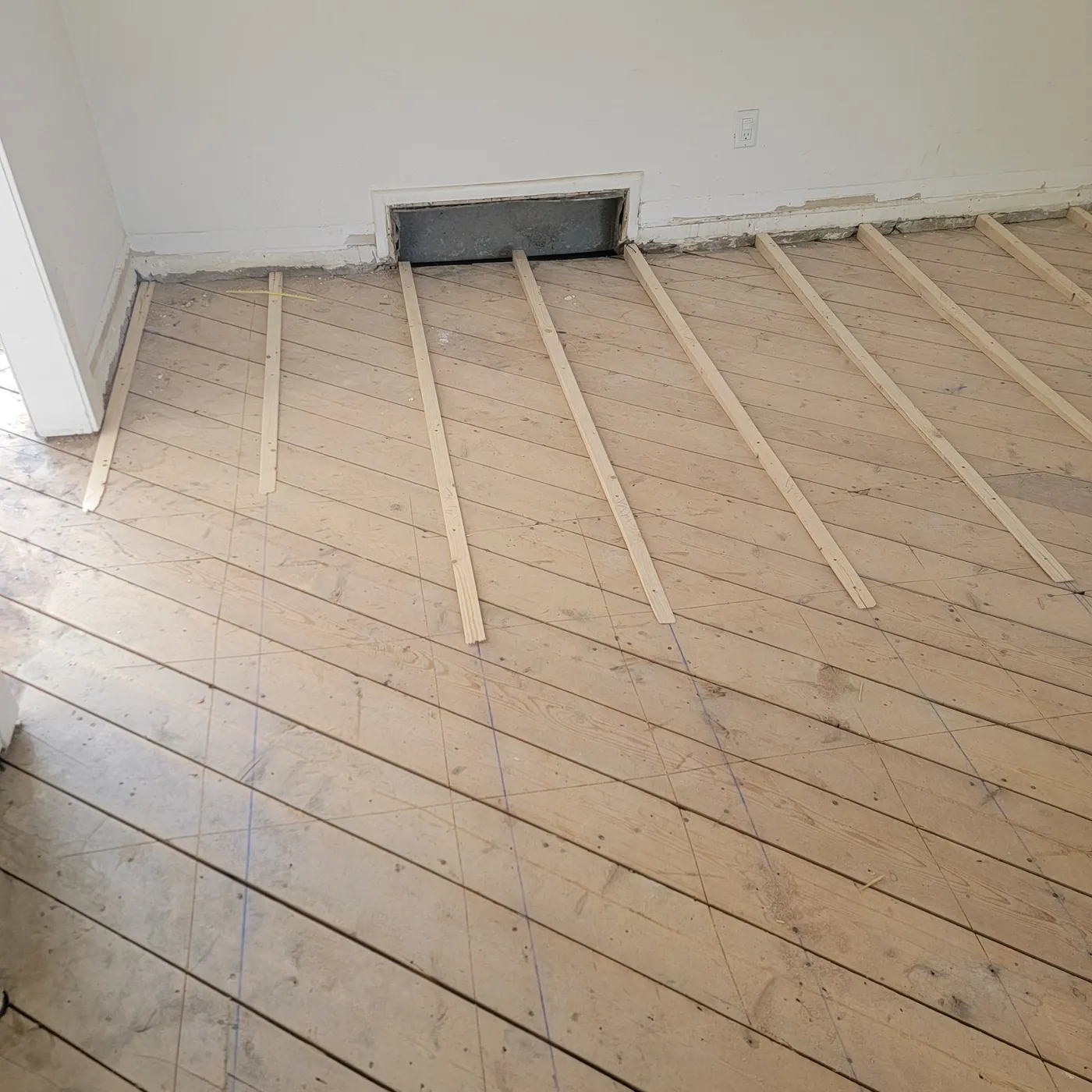
Removing the old floor
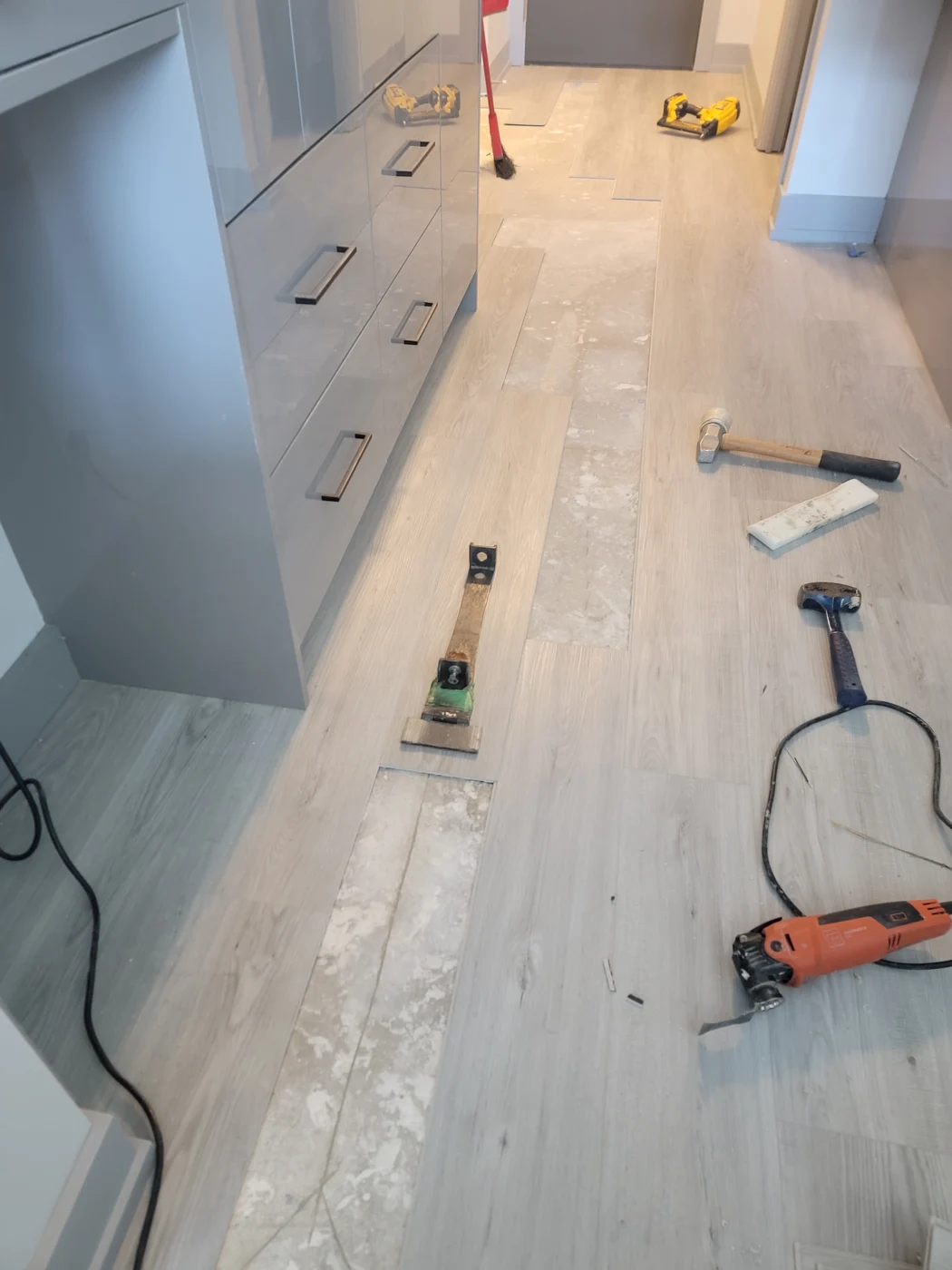
Carpet, underpad, tack strips and every staple are removed. Old hardwood is pulled up board by board, and nails are cleared so nothing sticks up under the new floor.
Screwing down the subfloor
Squeaks usually come from subfloor sheets that have loosened from the joists. The sheets are screwed down into the joists so they stop moving. This is one of the simplest ways to get a quiet new floor.
Flattening
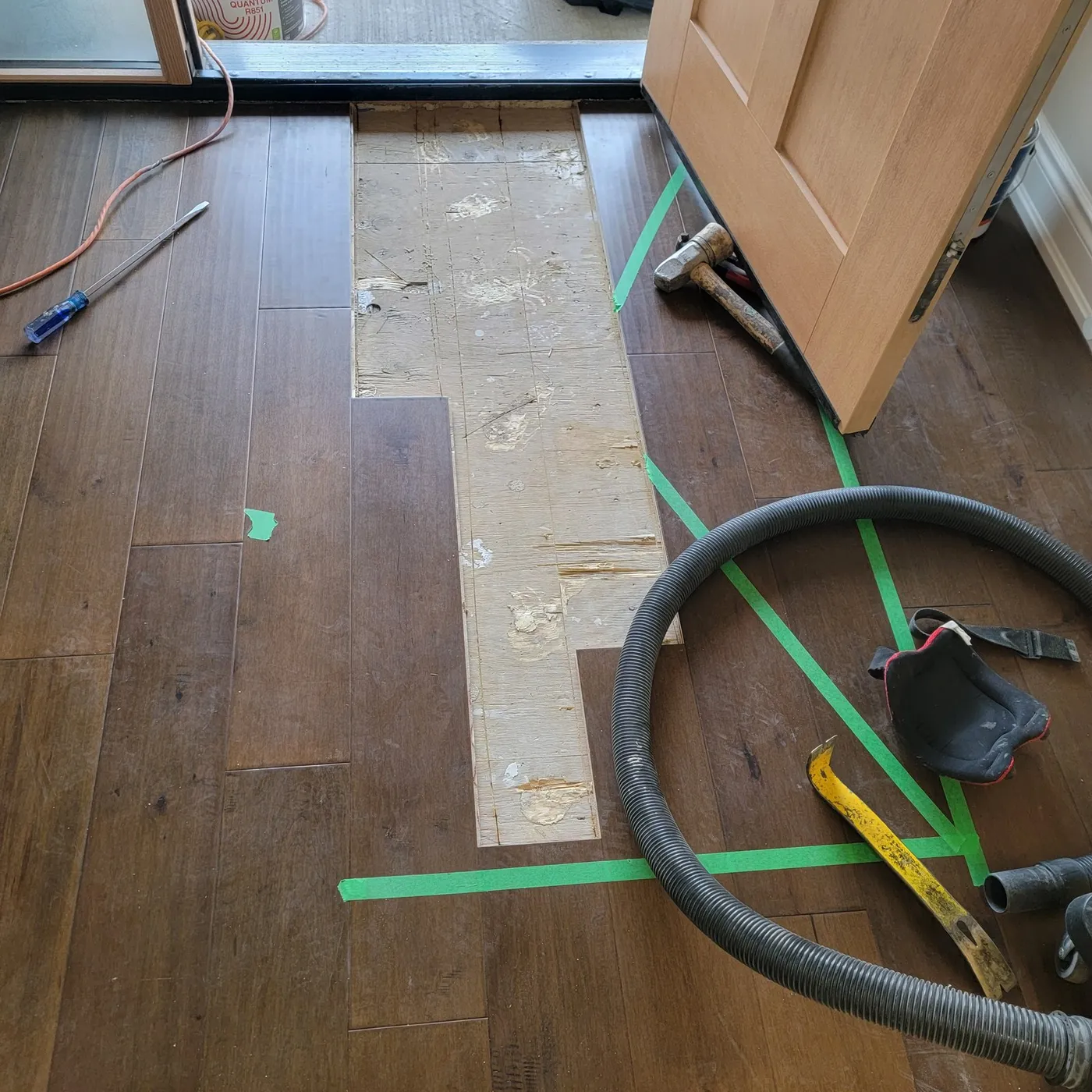
High seams are sanded or planed, low areas are filled, and damaged or water-stained sections are cut out and replaced. Many flooring manufacturers set a flatness tolerance that the subfloor must meet.
Adding a layer
Thin or damaged subfloors can be strengthened with an additional layer of plywood, which also gives a fresh, flat surface for nail-down or glue-down flooring.
Common questions
Why does my floor squeak?
Most squeaks come from loose subfloor or boards rubbing against nails. Screwing the subfloor to the joists fixes most of them.
Is subfloor preparation always needed?
Some preparation is almost always needed. How much depends on what is found once the old floor is removed.
Can new flooring go over old hardwood?
Sometimes, if the old floor is flat and firmly attached and the added height works with doors and stairs.
Planning this for your home?
Send your city, rough measurements and a few photos. We will tell you which method suits your floor or stairs and give you an estimate after a visit.