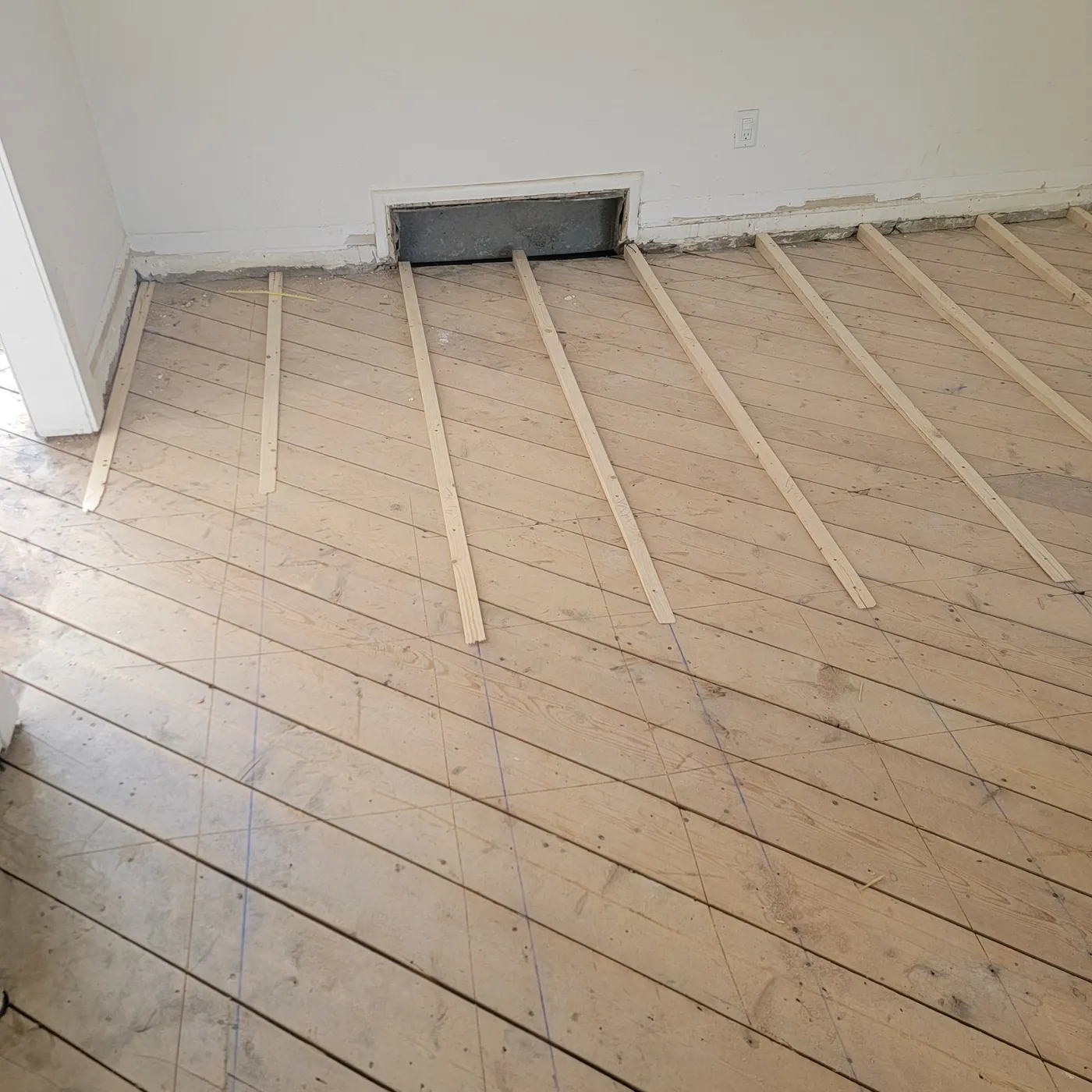
Why condos care about underlay
Most condo corporations have flooring rules that set a minimum sound rating or require an approved underlay. Before any work starts, check your building's rules and get approval from management. We can help you gather the product information they ask for.
Why cork
Cork is dense, stable and naturally resilient. It absorbs footstep noise, adds a little warmth on concrete, and accepts adhesive well, so the finished floor stays firm and quiet instead of feeling spongy.
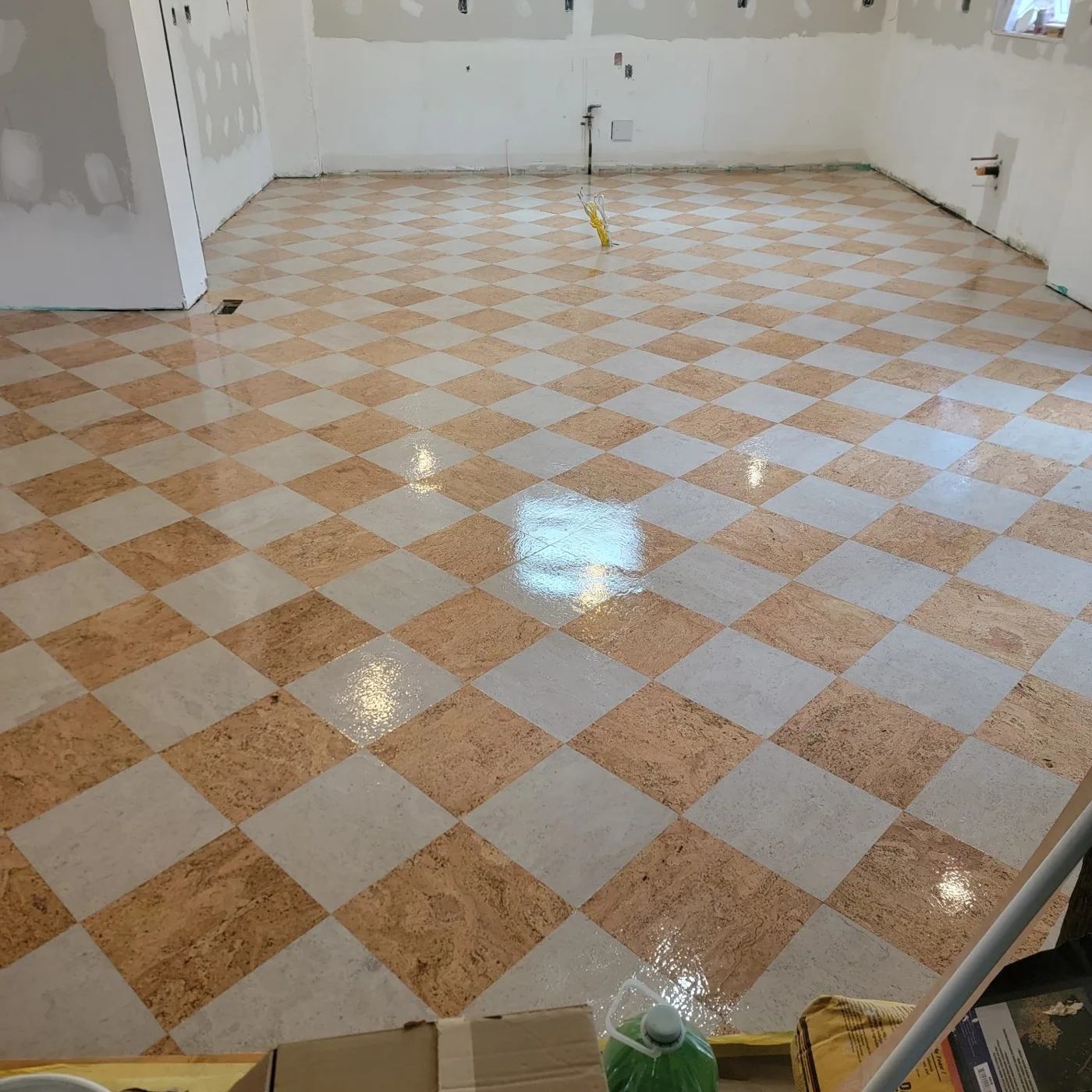
Step one: cork to concrete
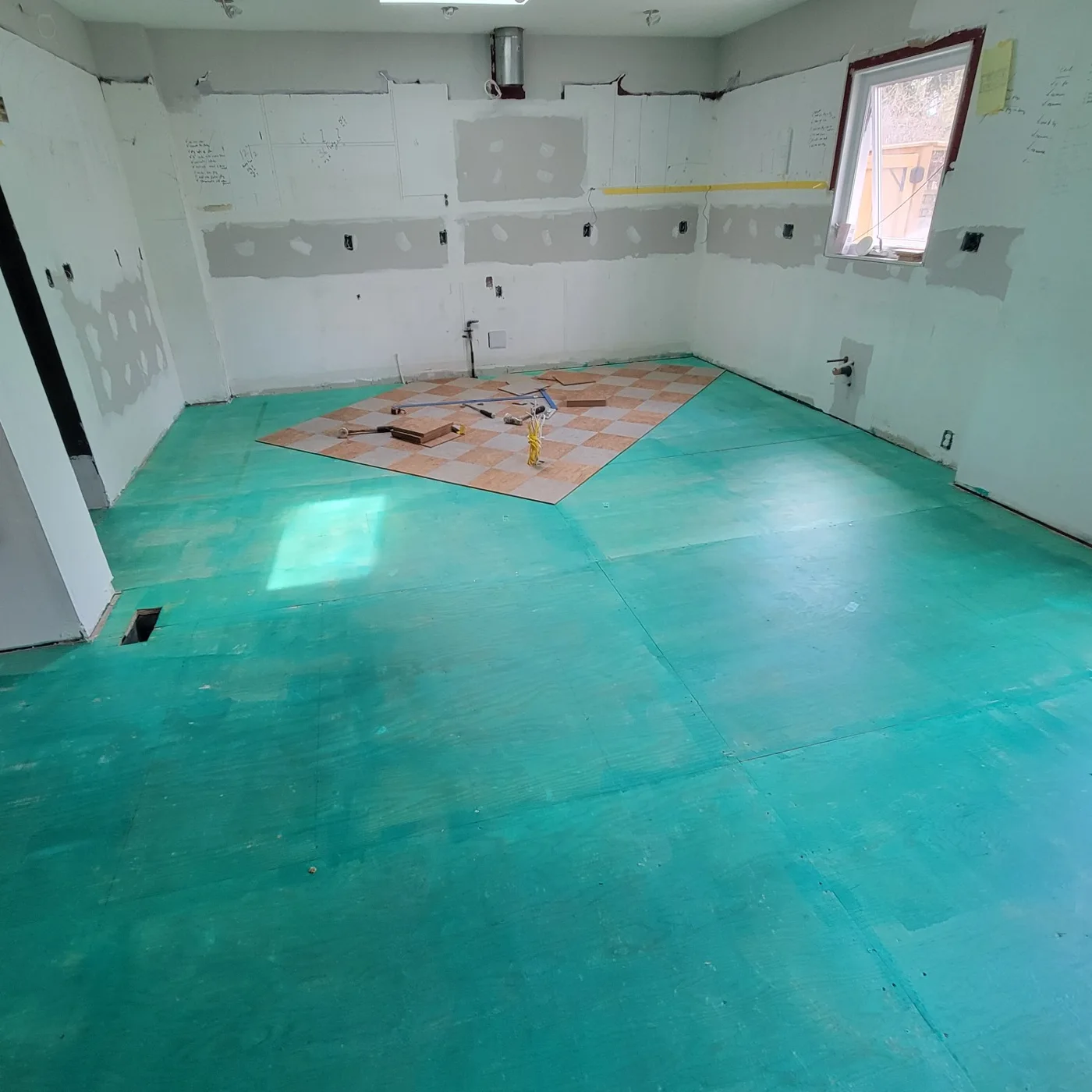
The slab is cleaned, patched and checked for flatness. The cork sheets or rolls are glued to the concrete and rolled so the bond is complete, with tight seams between sheets.
Step two: flooring to cork
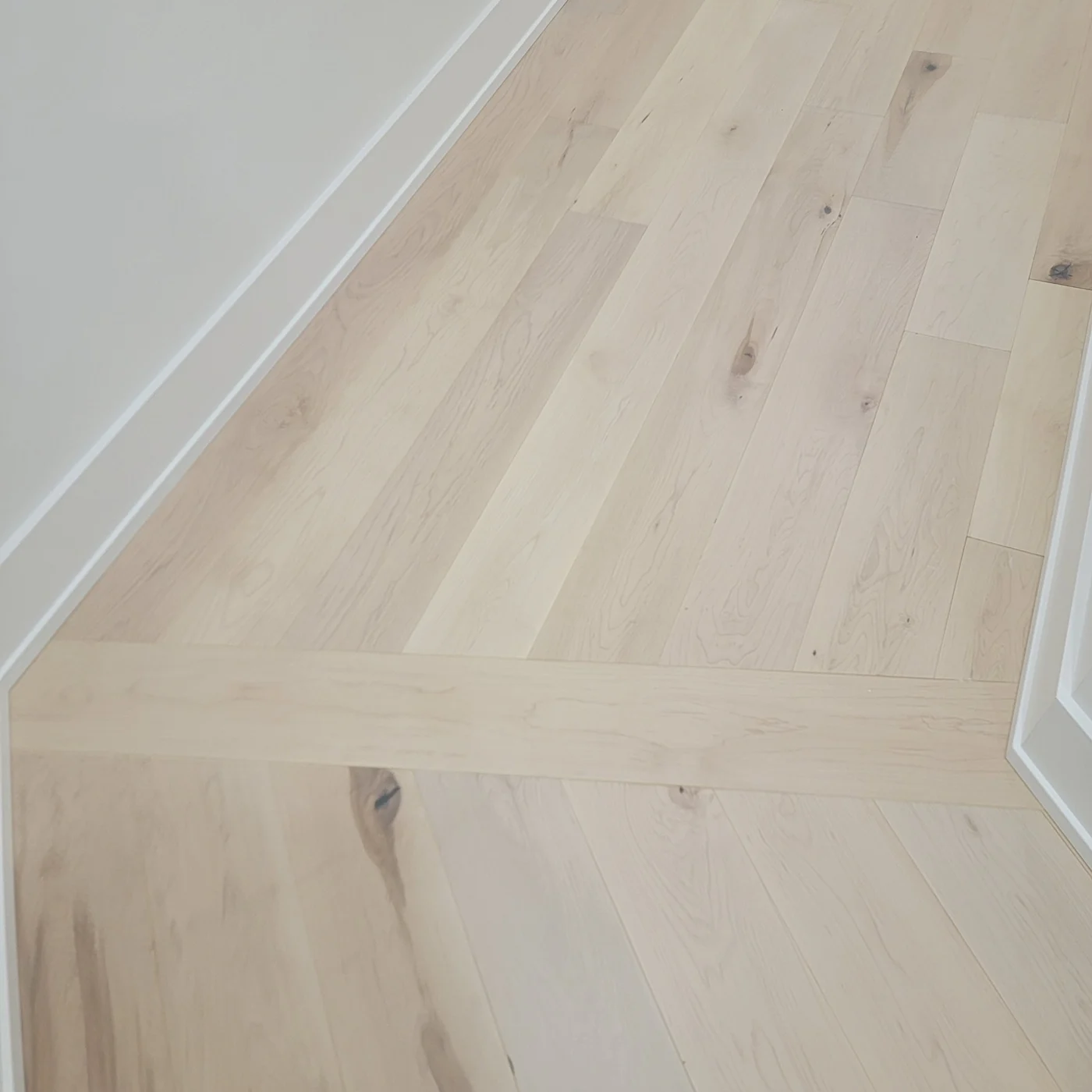
Once the first layer is ready, engineered hardwood or glue-down vinyl is spread with adhesive and installed over the cork. The result is one bonded system with no floating movement.
Double glue-down vs floating
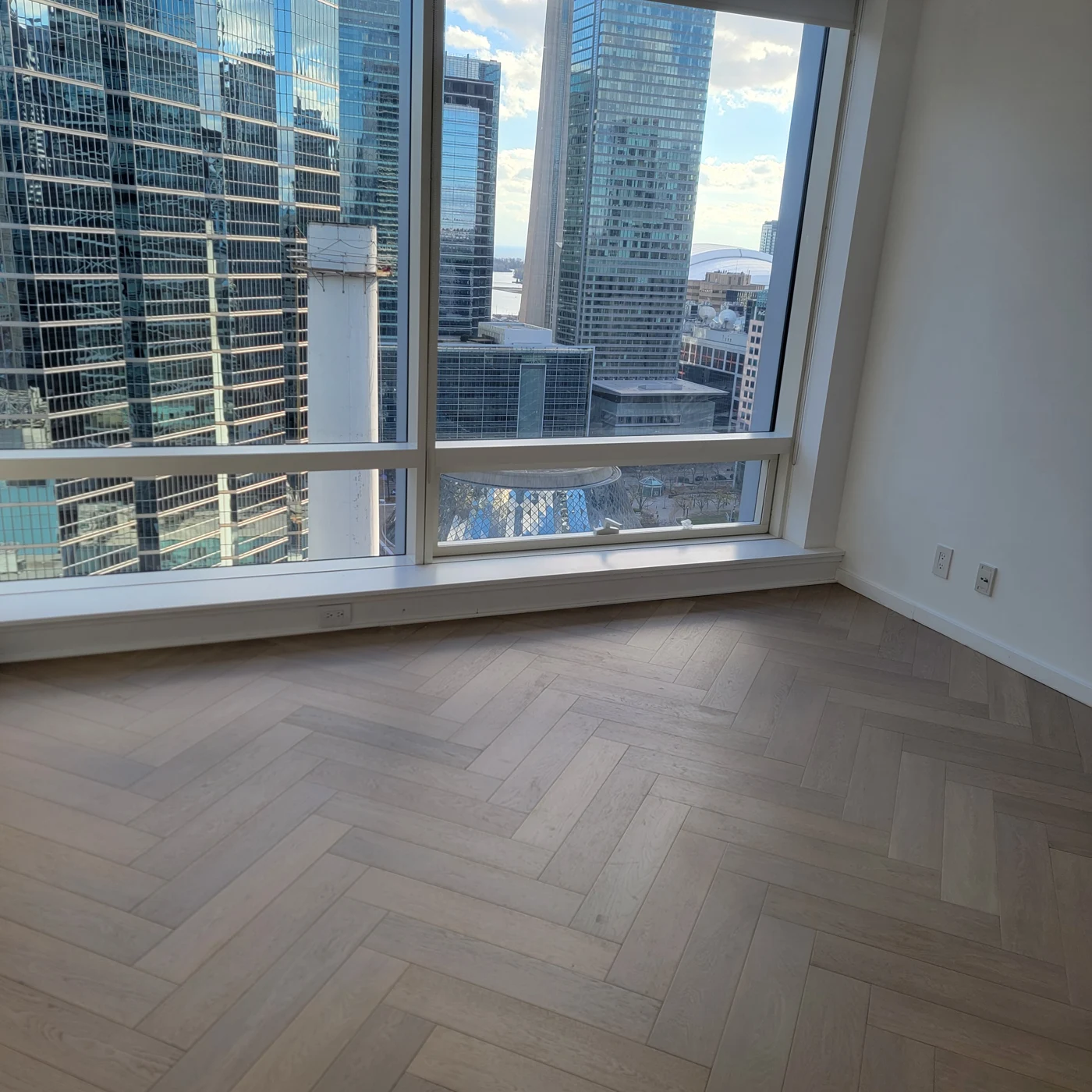
A floating floor over a foam or rubber underlay is faster, but can sound hollow and may not meet every building's rules. Double glue-down takes longer and costs more in materials, but it is quieter, feels more solid and is easier to repair one plank at a time.
Common questions
Does every condo require cork underlay?
No. Requirements differ between buildings. Some accept several underlays that meet a sound rating, others list specific products. Always check with your property management first.
How long does double glue-down take?
Longer than a floating floor, because each layer needs adhesive and curing time. For a typical condo unit, plan for several days rather than one.
Can vinyl be double glued over cork?
Yes, when the vinyl manufacturer approves the cork underlay and adhesive. The cork surface must be flat and clean, because thin vinyl shows any imperfection.
Planning this for your home?
Send your city, rough measurements and a few photos. We will tell you which method suits your floor or stairs and give you an estimate after a visit.