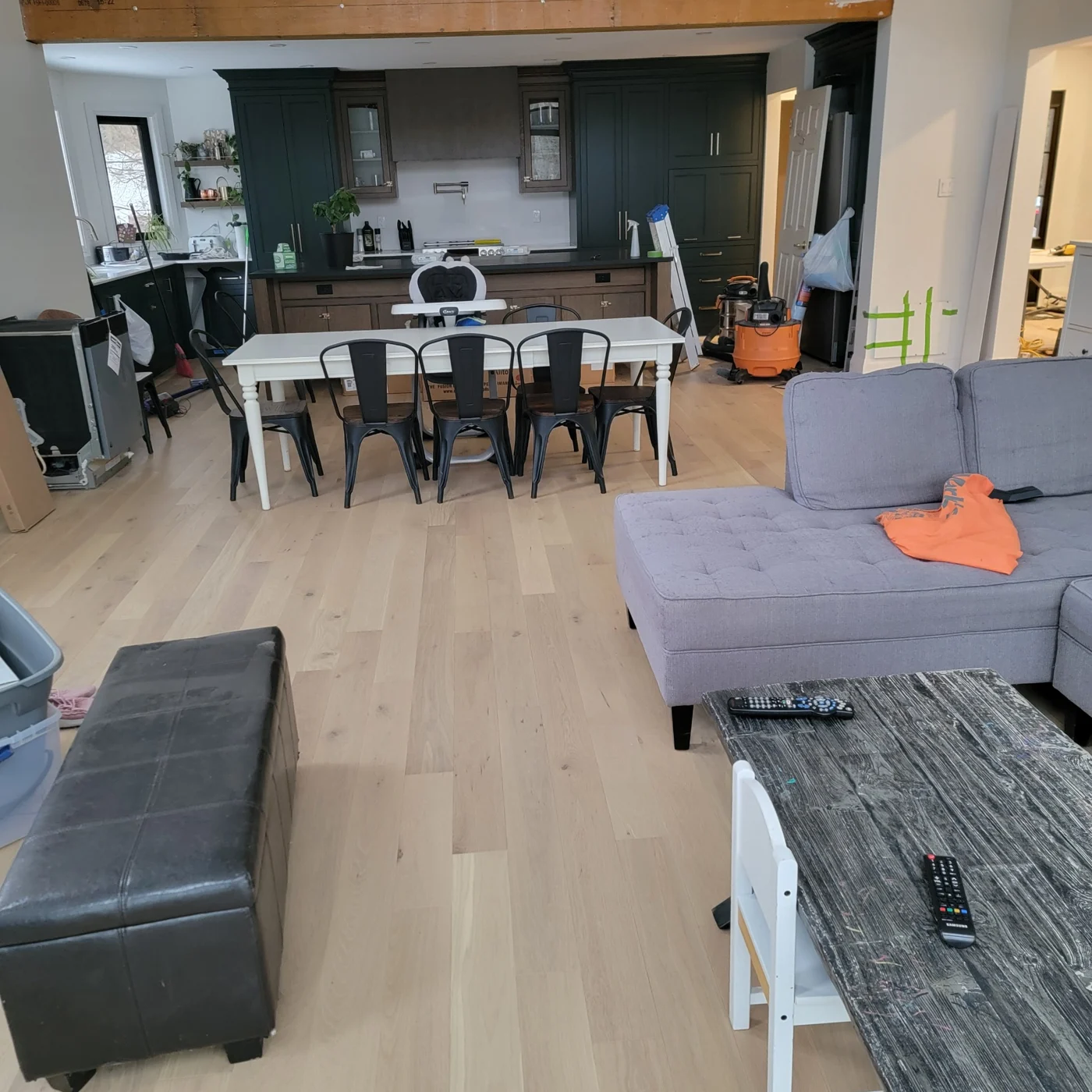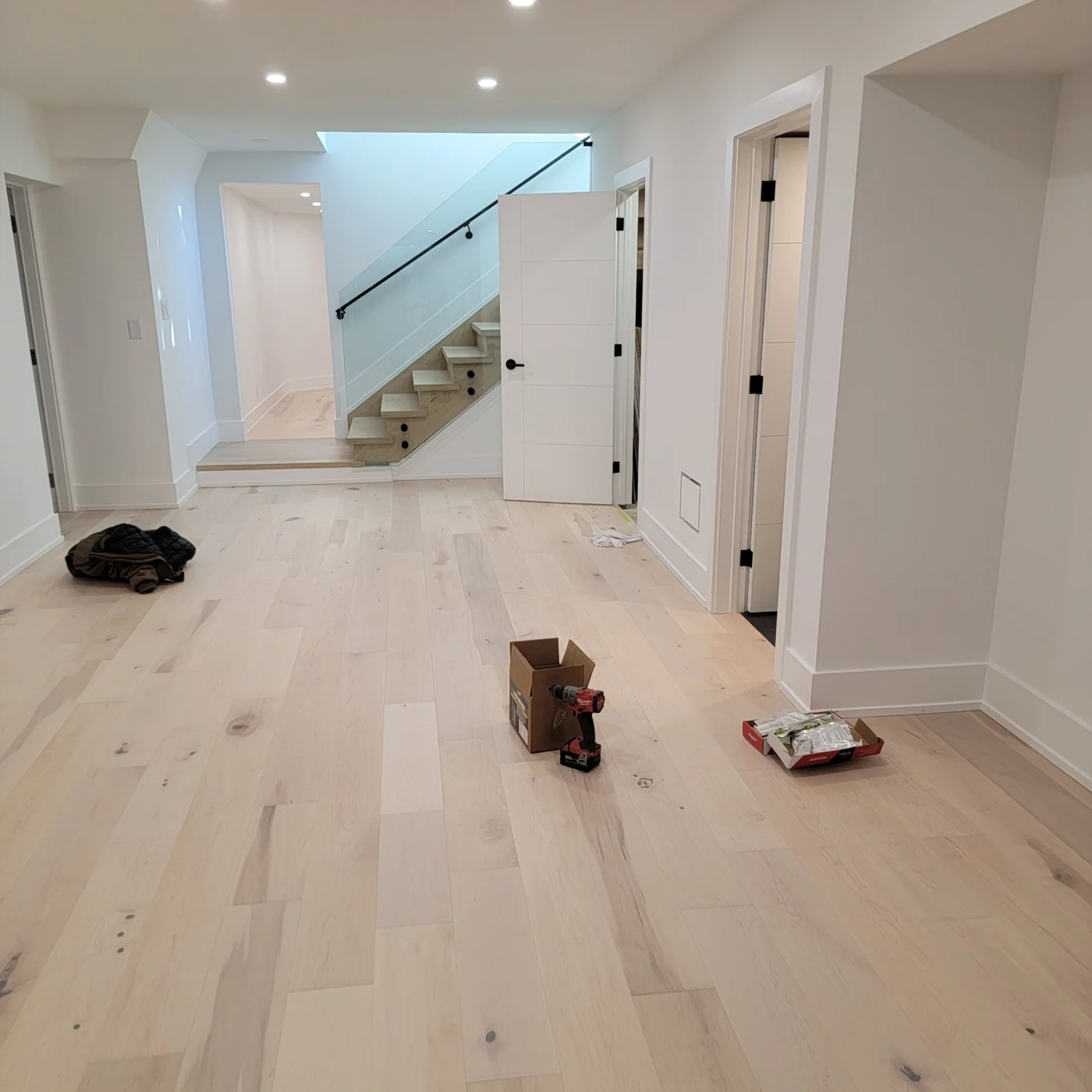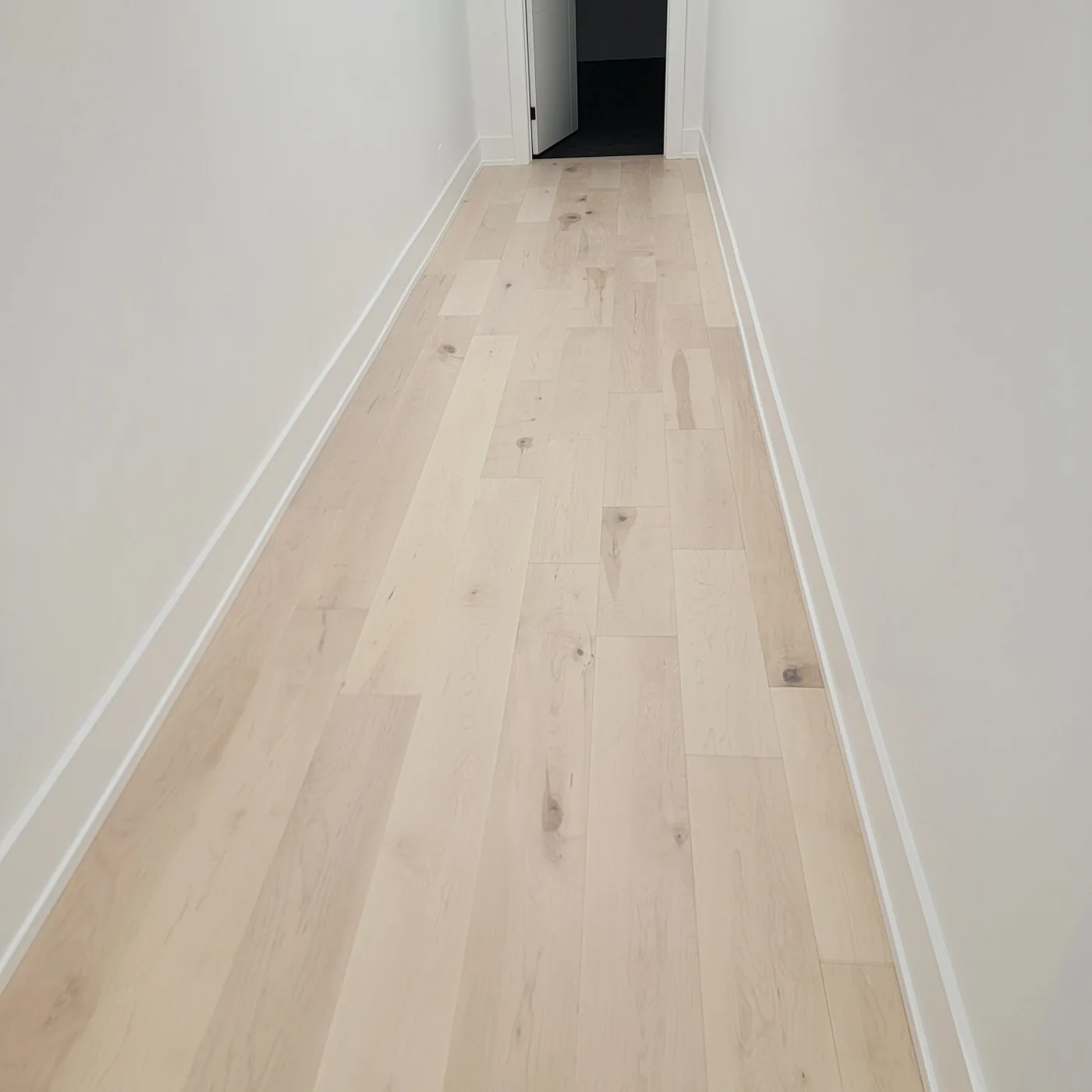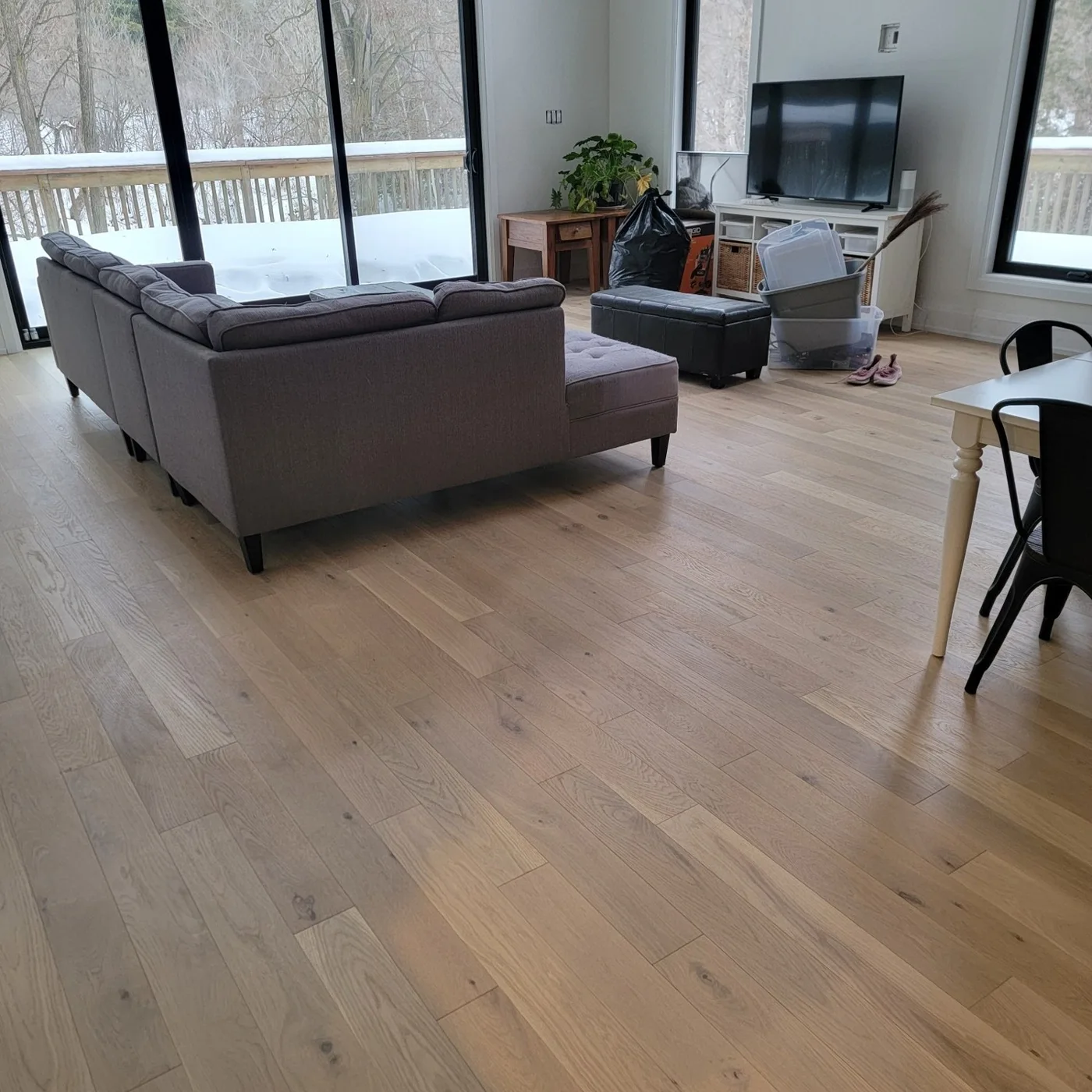
Where solid hardwood can go
On or above ground level, over a plywood or OSB subfloor on joists. It is not recommended directly on concrete or in basements, where engineered flooring is the better choice.
Acclimation and humidity
Wood takes on moisture from the air. The flooring and subfloor are checked with a moisture meter and allowed to reach a balance with the home before installation. Keeping indoor humidity moderate all year, with a humidifier in winter, helps prevent gaps and cupping.
Prefinished or unfinished
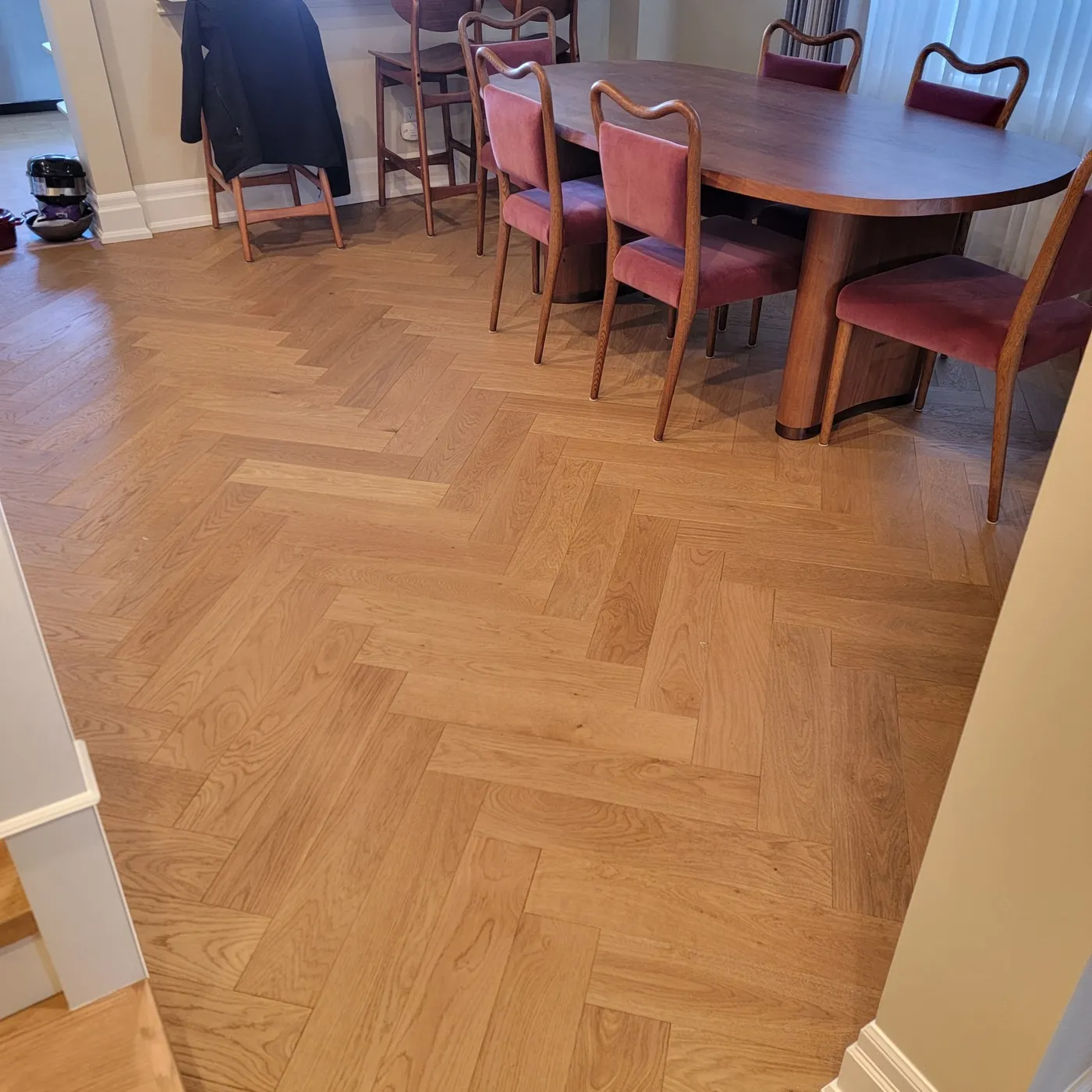
Prefinished boards arrive with a factory finish, so the floor is ready as soon as it is installed. Unfinished boards are sanded, stained and coated on site, which allows a custom colour and a perfectly flush surface.
Installation
Boards run perpendicular to the joists where possible. Each board is blind-nailed through the tongue with a flooring nailer, with nail spacing set by the manufacturer. Board lengths are mixed so end joints are spread out and look natural.
Patterns
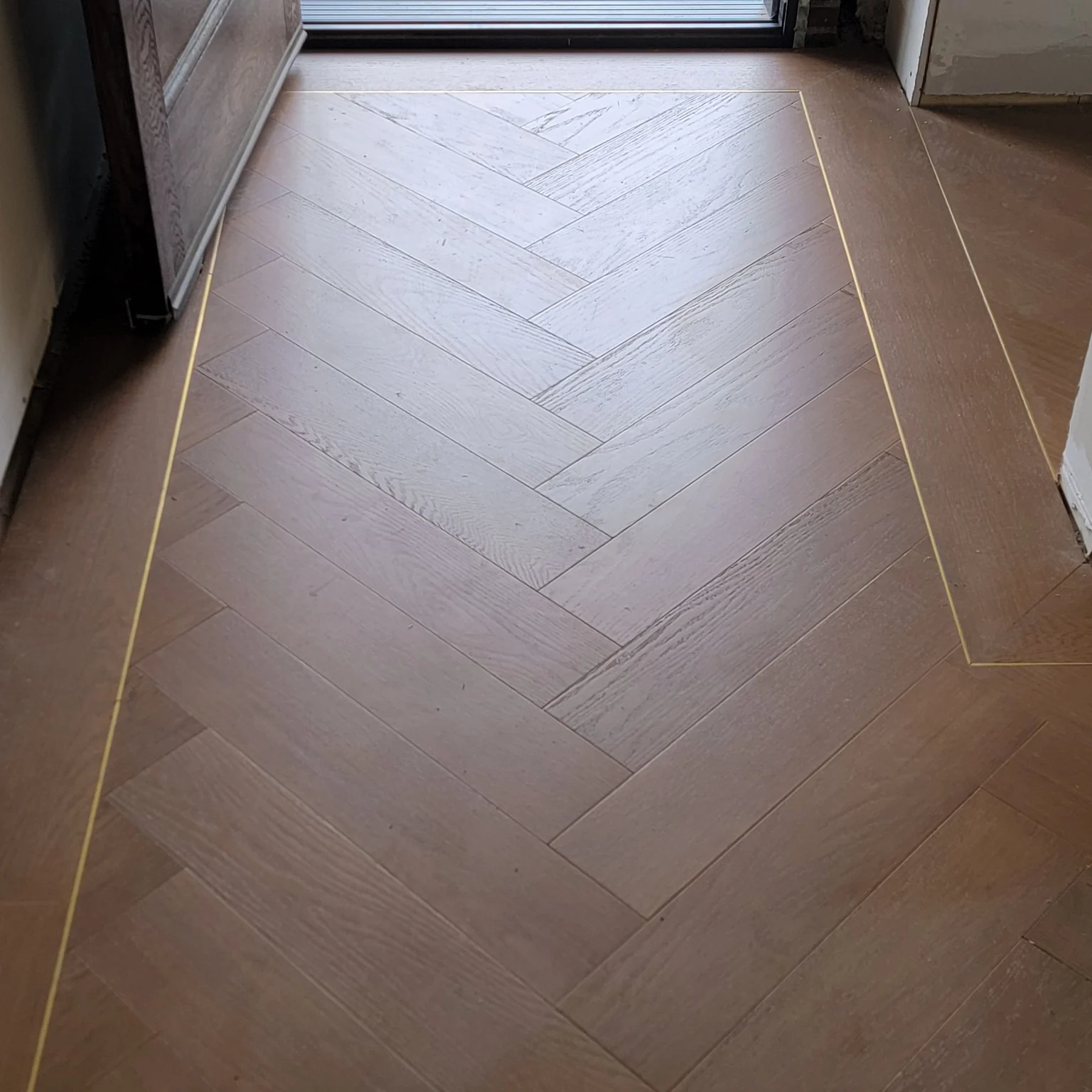
Solid hardwood can also be installed in herringbone or chevron, with borders and feature strips. Pattern floors need more layout time and precise cutting.
Common questions
How long does solid hardwood last?
With care it can last for decades. A 3/4-inch solid floor can usually be sanded and refinished several times.
Why do hardwood floors get gaps in winter?
Dry winter air makes wood shrink. Small seasonal gaps are normal; keeping humidity steadier reduces them.
Solid or engineered hardwood?
Solid is ideal above grade over wood subfloors. Engineered is more stable and is the choice for concrete, basements and in-floor heating.
Planning this for your home?
Send your city, rough measurements and a few photos. We will tell you which method suits your floor or stairs and give you an estimate after a visit.