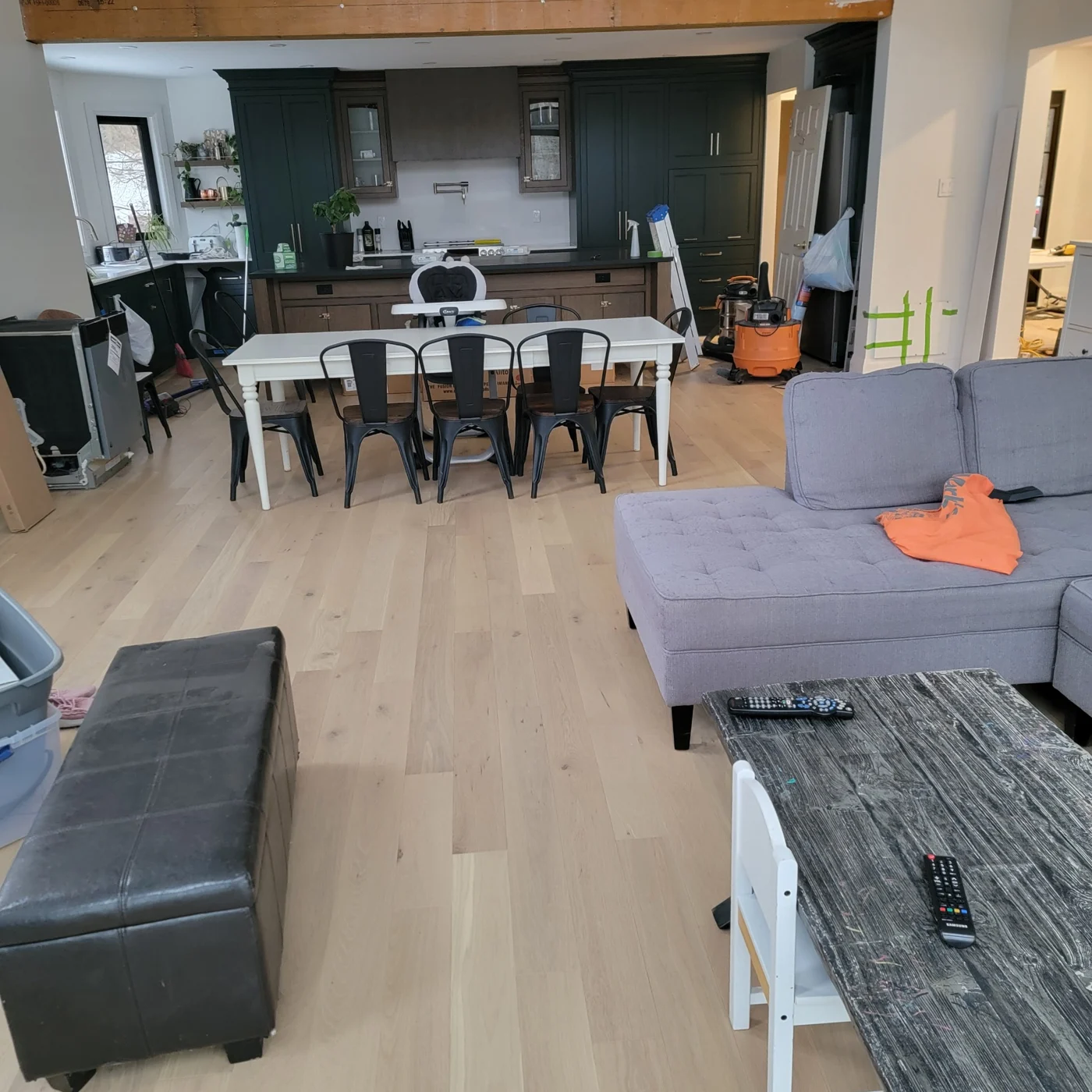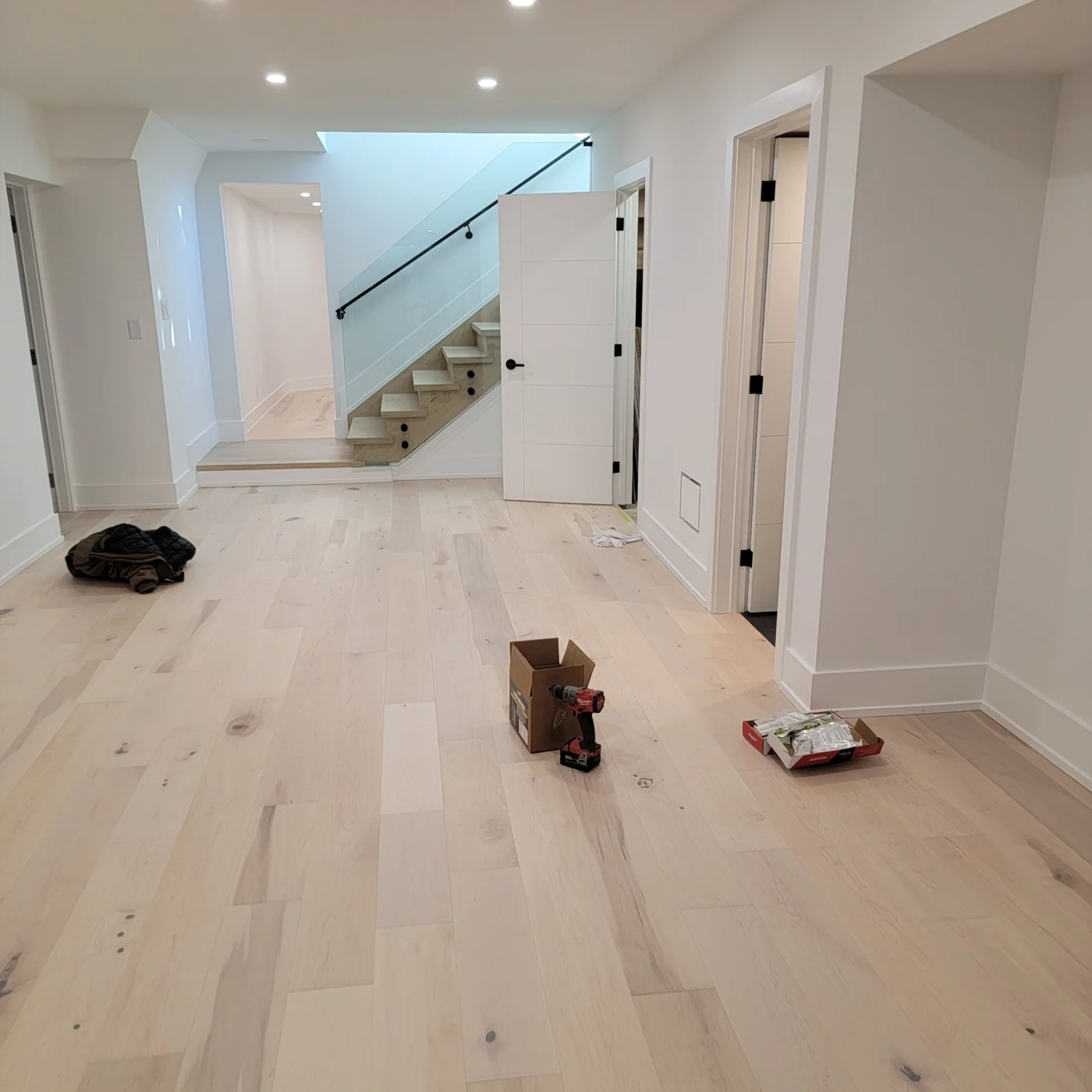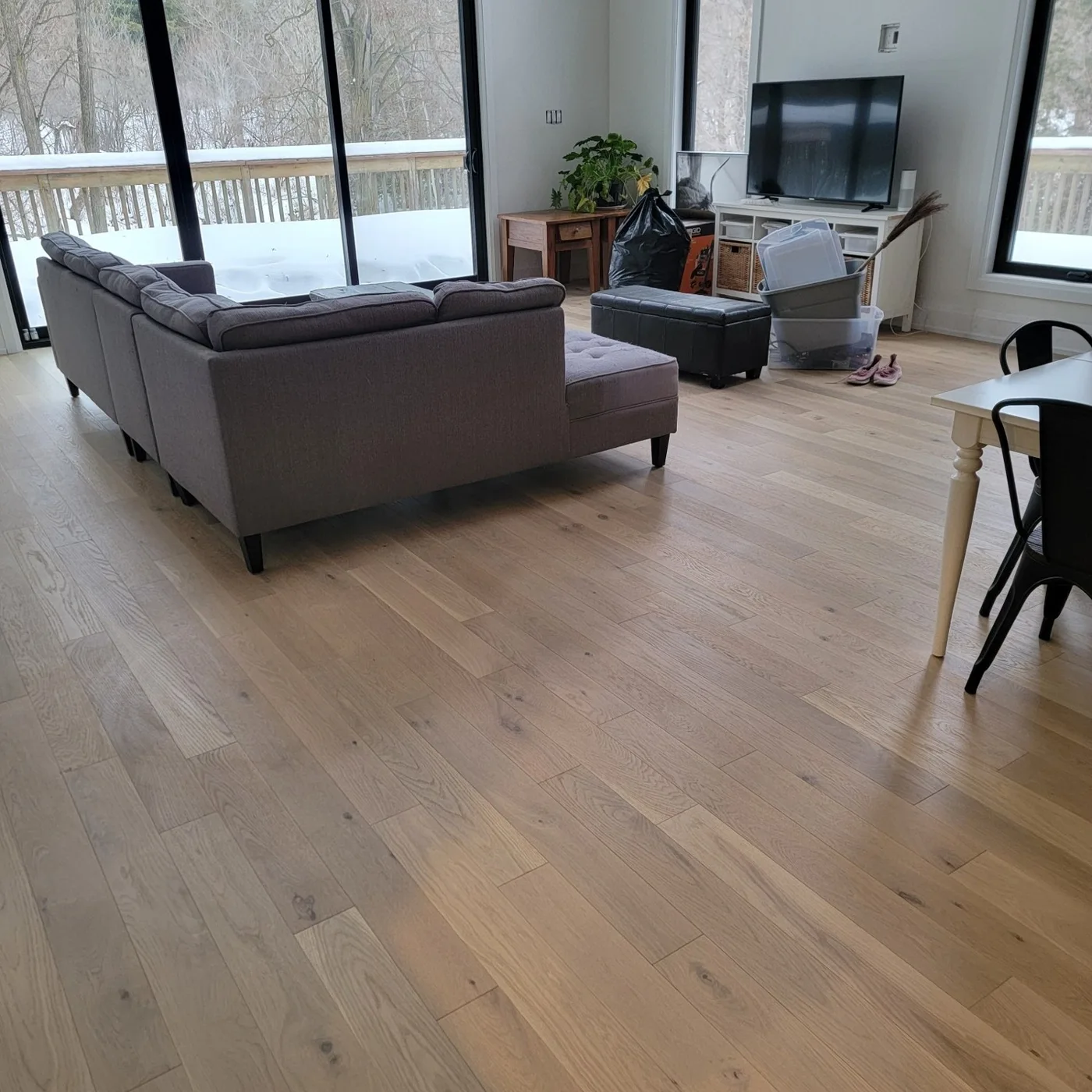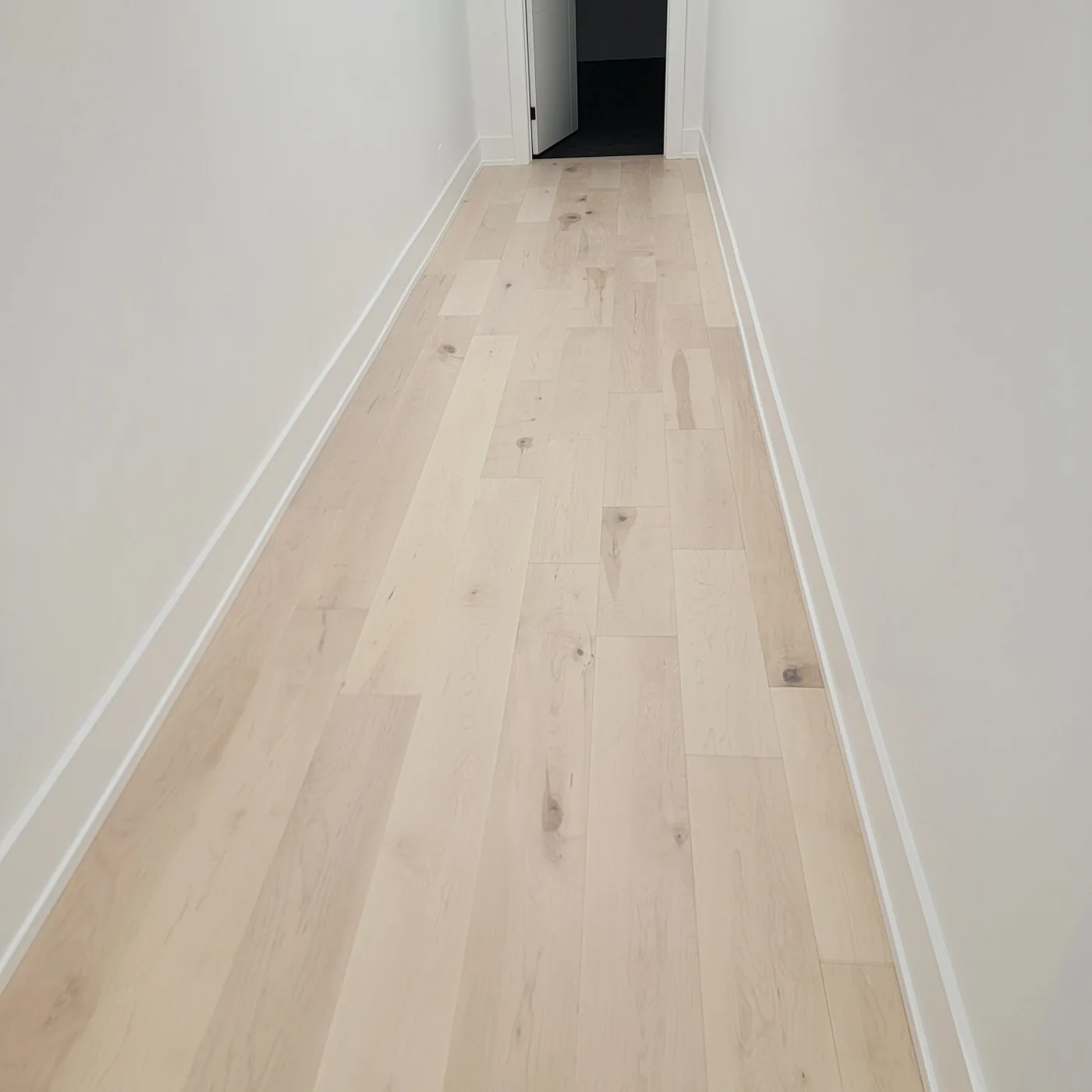
Where floating floors work well
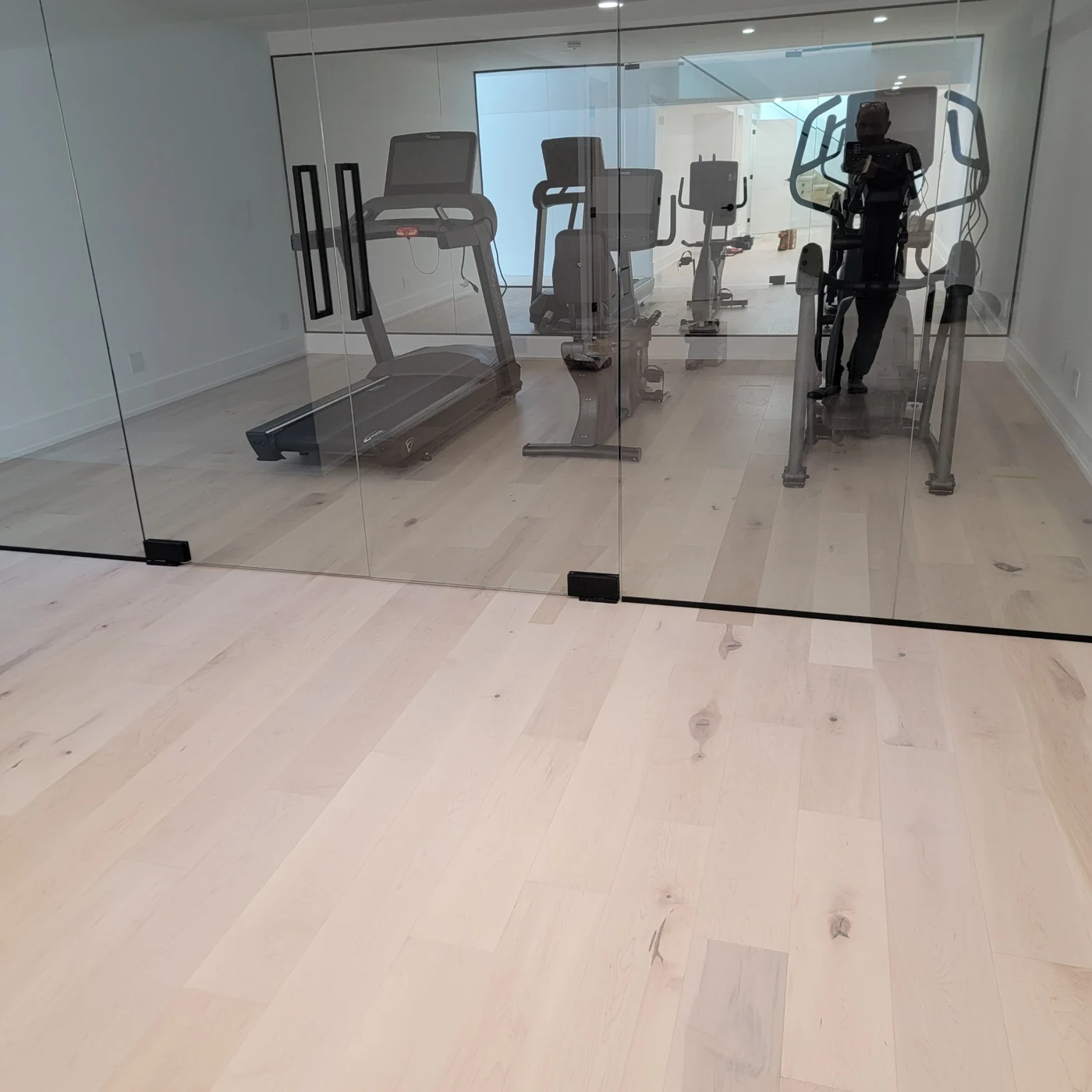
Basements with a dry slab, condos that allow floating floors with an approved underlay, and renovations where the existing subfloor should not be nailed or glued. It is also useful when you want to keep the job quick and avoid adhesive.
The underlay
The underlay cushions the floor, smooths minor imperfections and, in some products, adds a vapour barrier and sound control. The right underlay depends on the subfloor and on the flooring manufacturer's requirements.
Expansion space and transitions
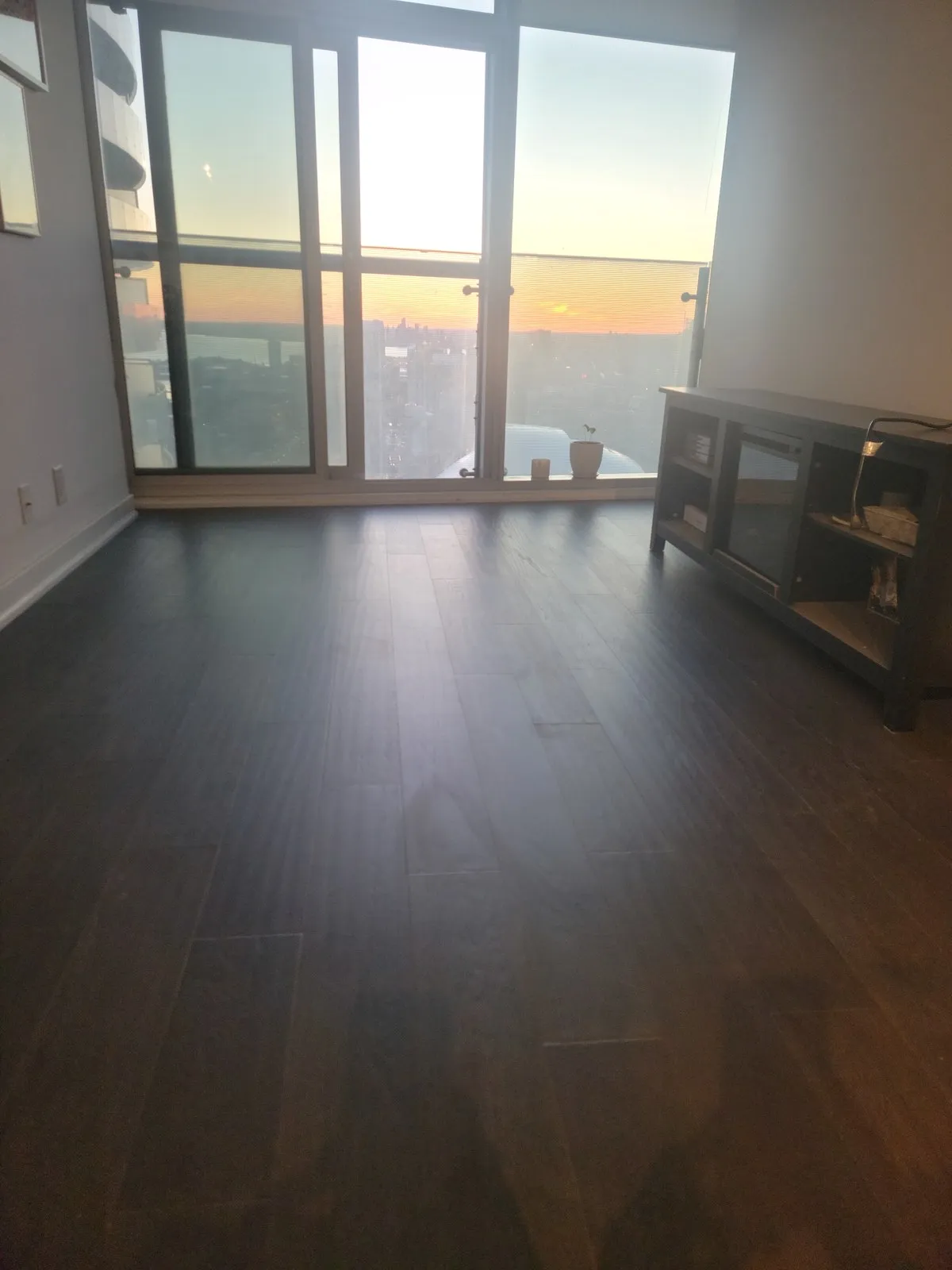
Because the whole floor moves as one piece with humidity, it needs a gap around every wall, pipe and door frame, hidden under baseboards. Very long runs and doorways between large rooms may need transition strips so the floor can move without buckling.
Limits to know about
Heavy kitchen islands and cabinets should not sit on a floating floor. It can sound slightly hollower than a glued or nailed floor, and the subfloor must still be flat, or the joints can flex.
Common questions
Is a floating hardwood floor real wood?
Yes. Engineered planks have a real hardwood top layer. Only the installation method is different.
Can a floating engineered floor be refinished?
If the wear layer is thick enough, it can be lightly sanded and recoated. Thin wear layers can only be recoated.
Floating or glue-down in a basement?
Both can work on a dry slab. Glue-down feels more solid; floating is quicker and can be lifted more easily if needed.
Planning this for your home?
Send your city, rough measurements and a few photos. We will tell you which method suits your floor or stairs and give you an estimate after a visit.