Why glue it down
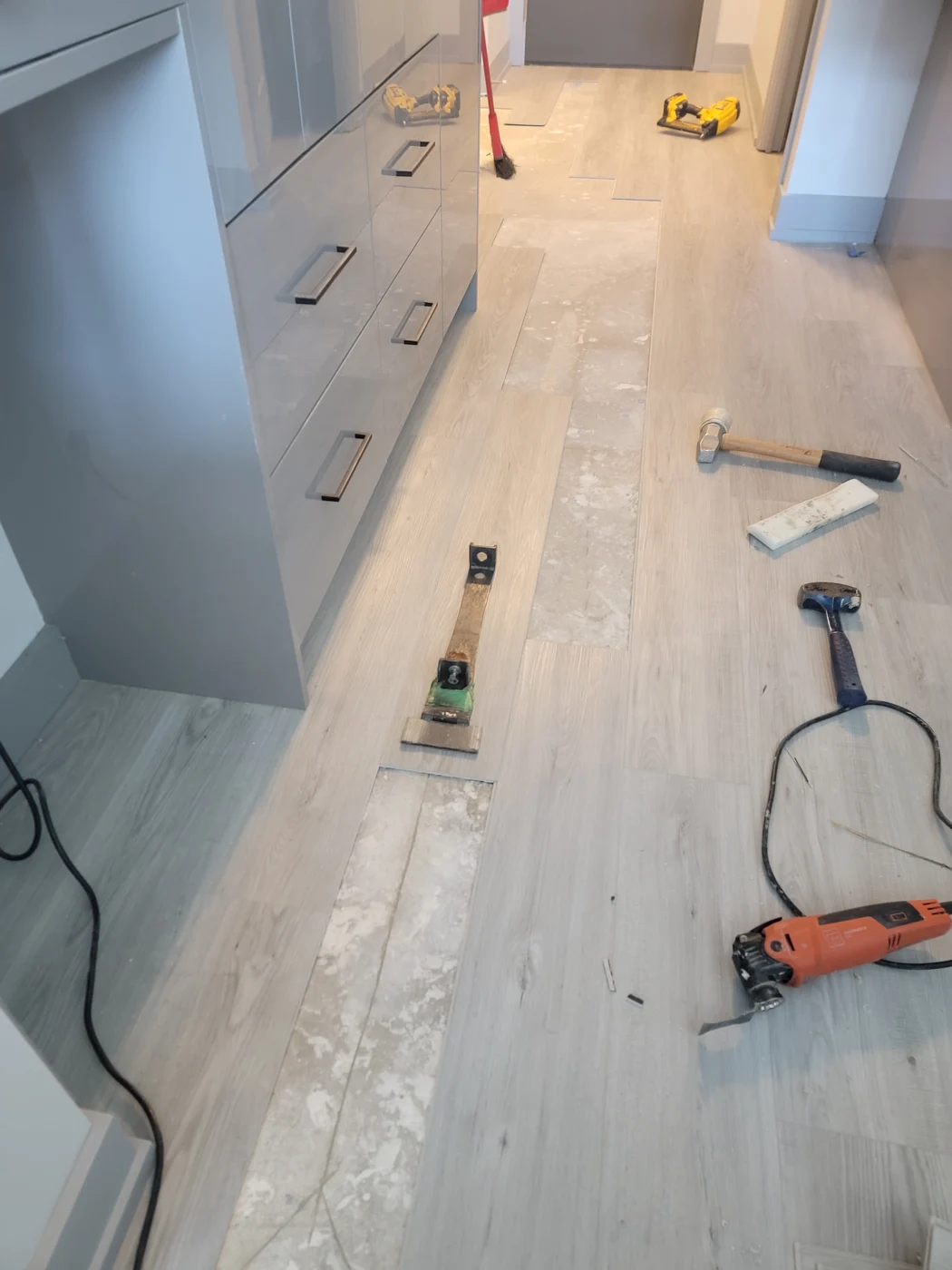
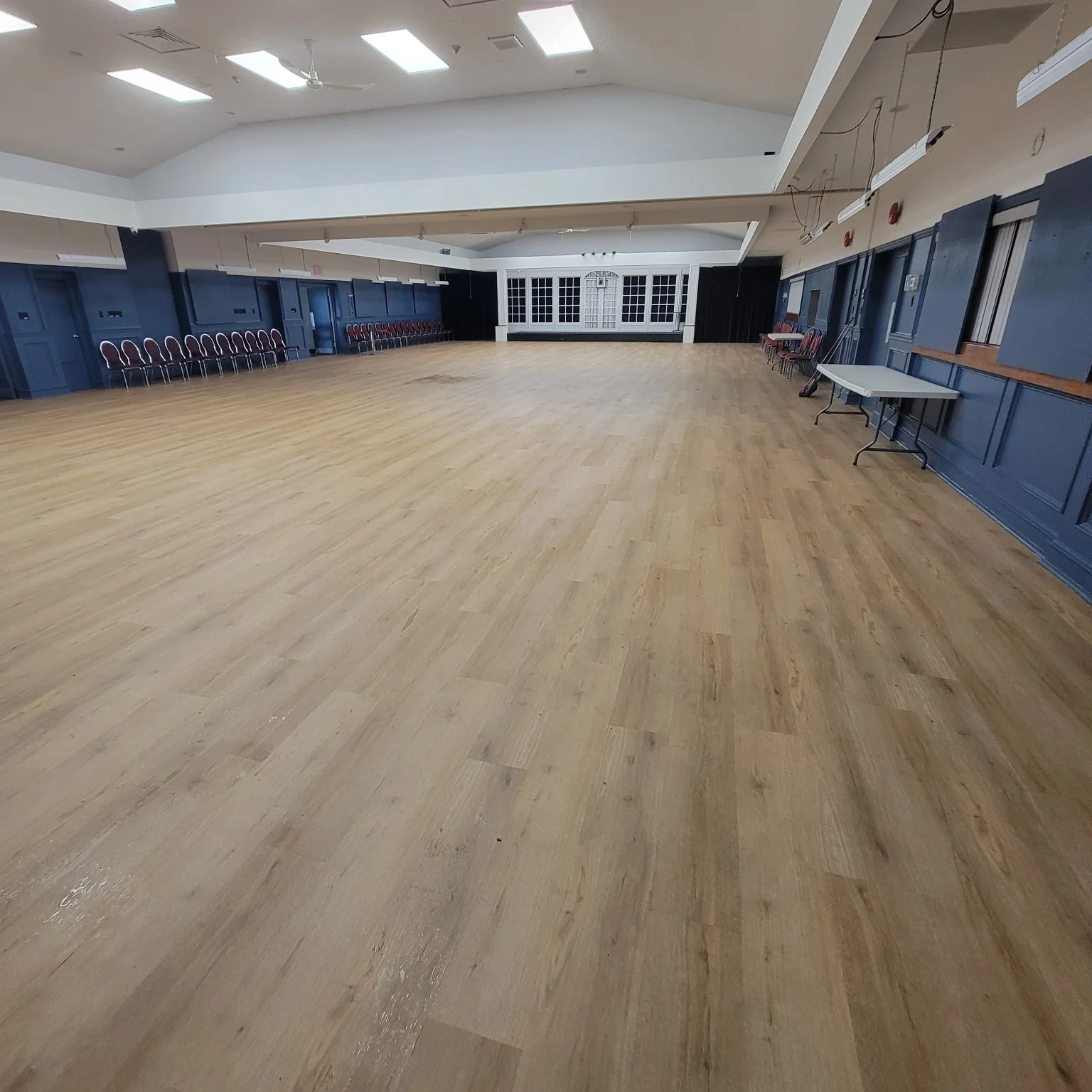
A glued floor does not move. There are no expansion gaps to hide, large open areas can be covered without transition strips, and single planks can be replaced if damaged.
Preparation is everything
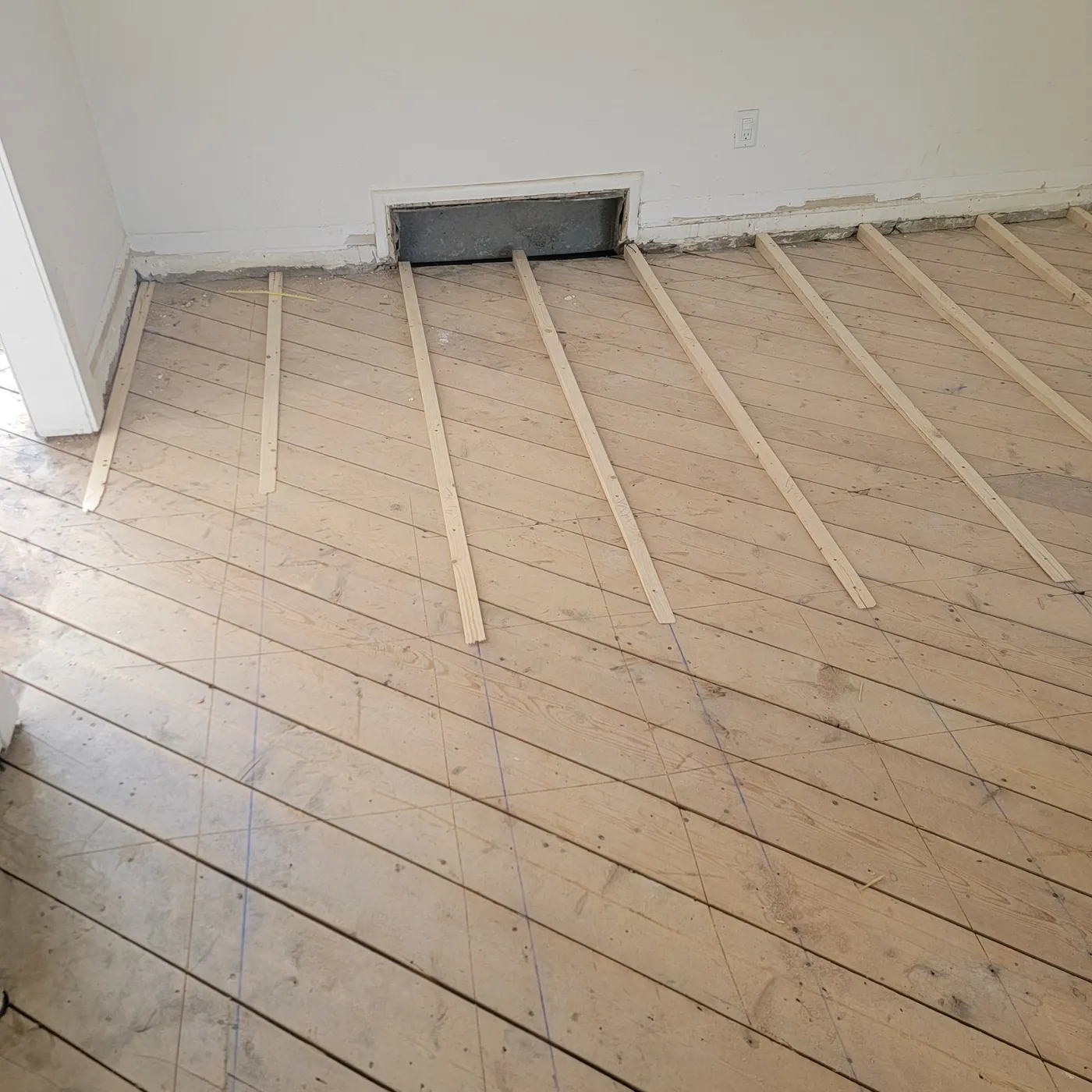
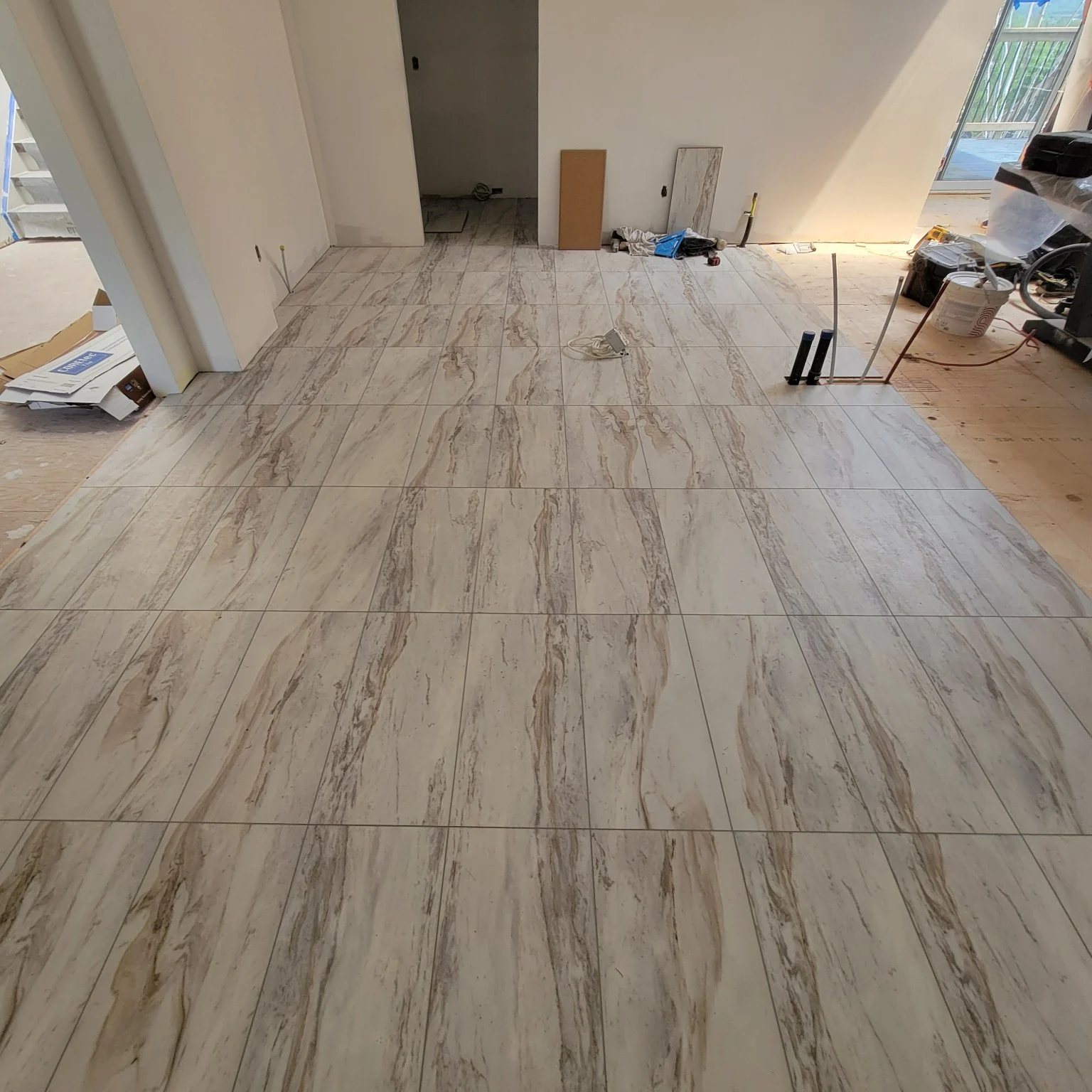
Thin vinyl shows every bump, crack and trowel line underneath it. Concrete is patched and skim-coated smooth, and wood subfloors may need an approved underlayment so the finished floor looks flat.
Adhesive and rolling
The adhesive type depends on the product and the space. It is spread with the specified trowel, the planks are laid in it at the right time, and the floor is rolled with a heavy roller to bond every edge.
Homes and businesses
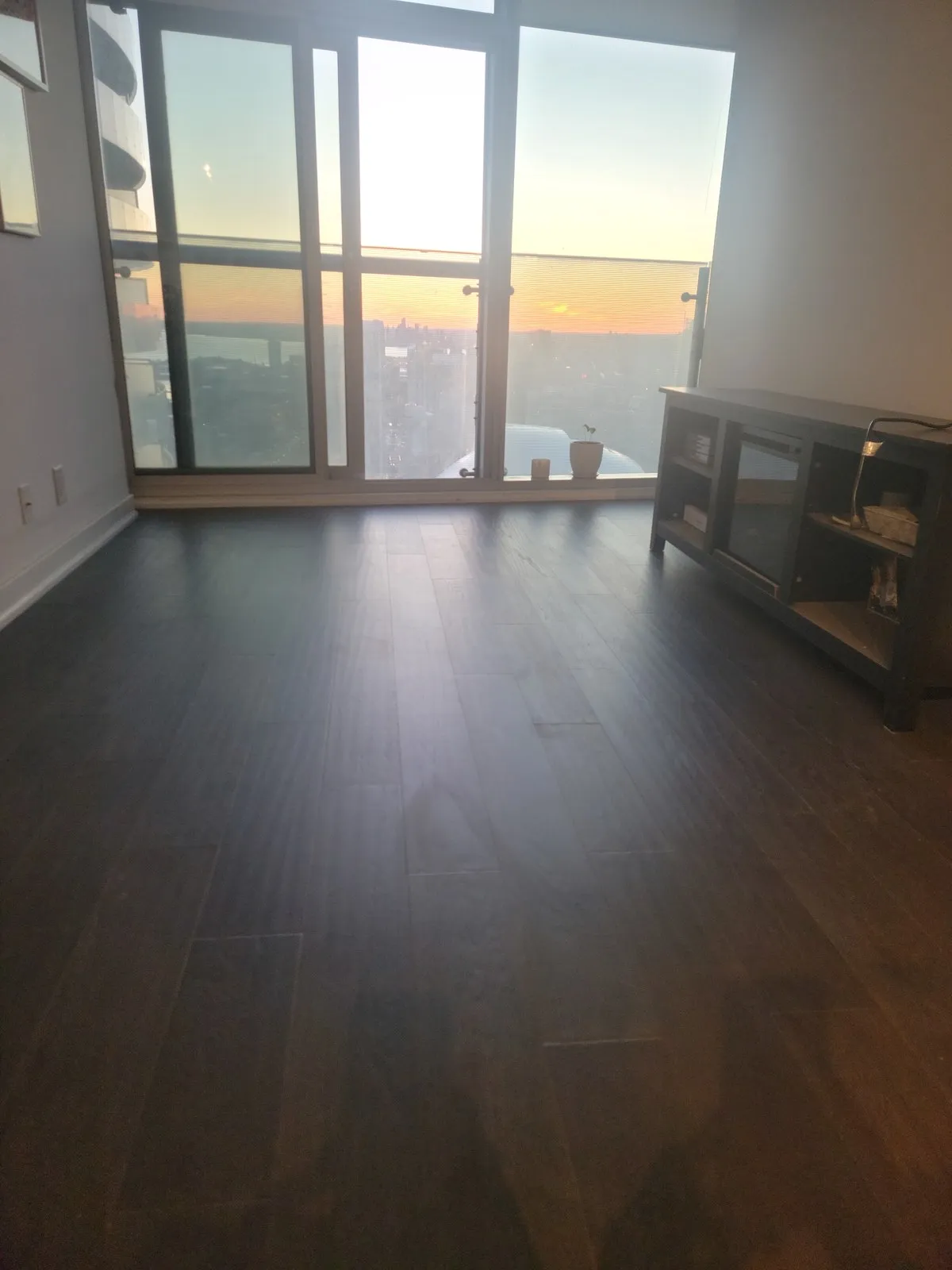
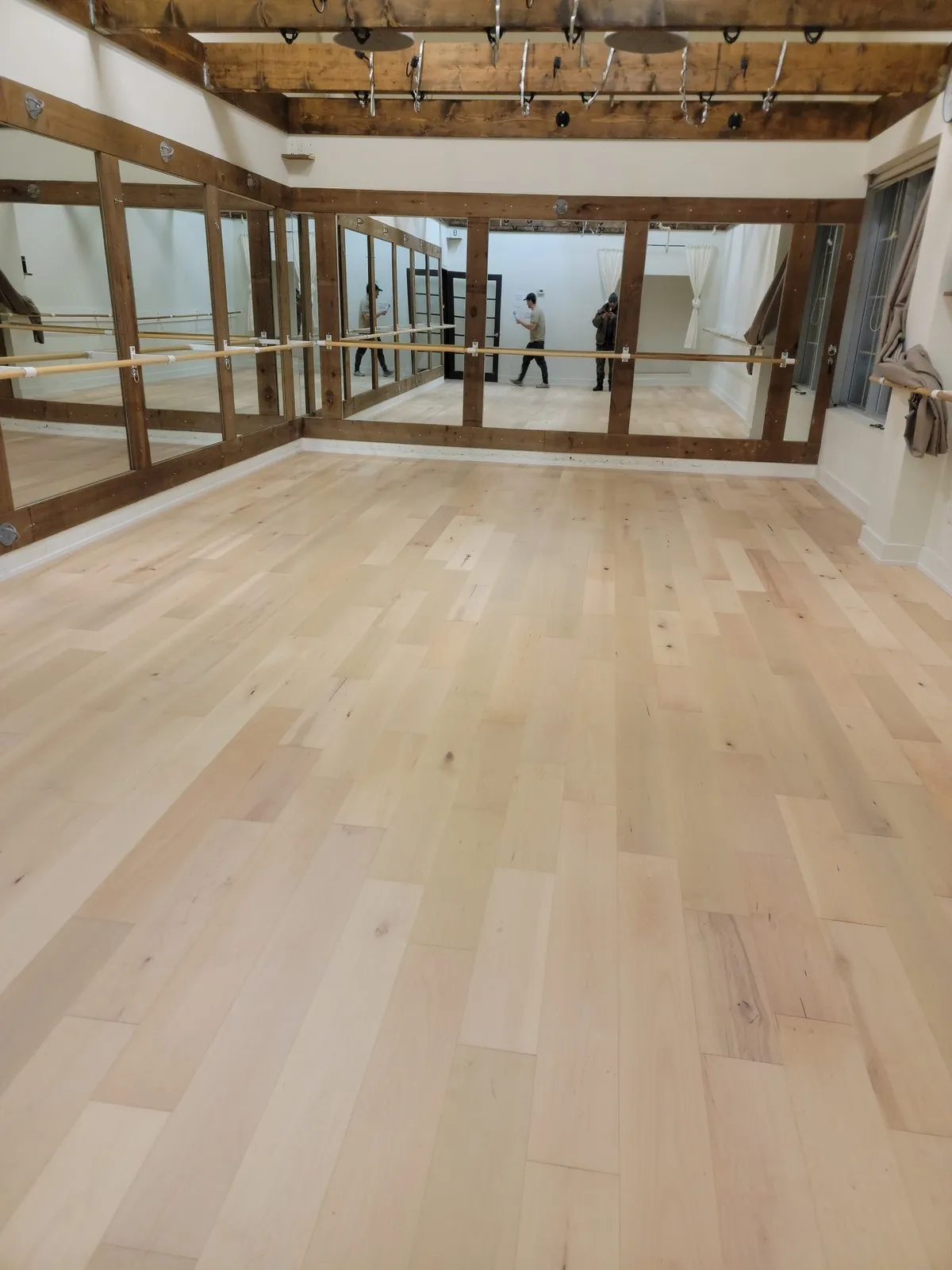
In homes it suits basements, kitchens and rooms with heavy furniture. In commercial spaces it is often installed after hours to keep the business open.
Common questions
Glue-down or click vinyl?
Glue-down is more stable for large areas and heavy loads. Click vinyl is faster and needs less preparation in homes.
Is glue-down vinyl waterproof?
The vinyl itself is water-resistant, but water can still get under it at walls and seams. Wipe spills quickly and fix leaks right away.
Can you install vinyl on concrete?
Yes. The slab is tested for moisture and prepared smooth first.
Planning this for your home?
Send your city, rough measurements and a few photos. We will tell you which method suits your floor or stairs and give you an estimate after a visit.