Rigid core and flexible vinyl
Rigid core planks have a stiff centre that bridges small imperfections and feels firmer underfoot. Many come with an attached underlay. Flexible click vinyl is thinner and needs a flatter subfloor.
Subfloor flatness
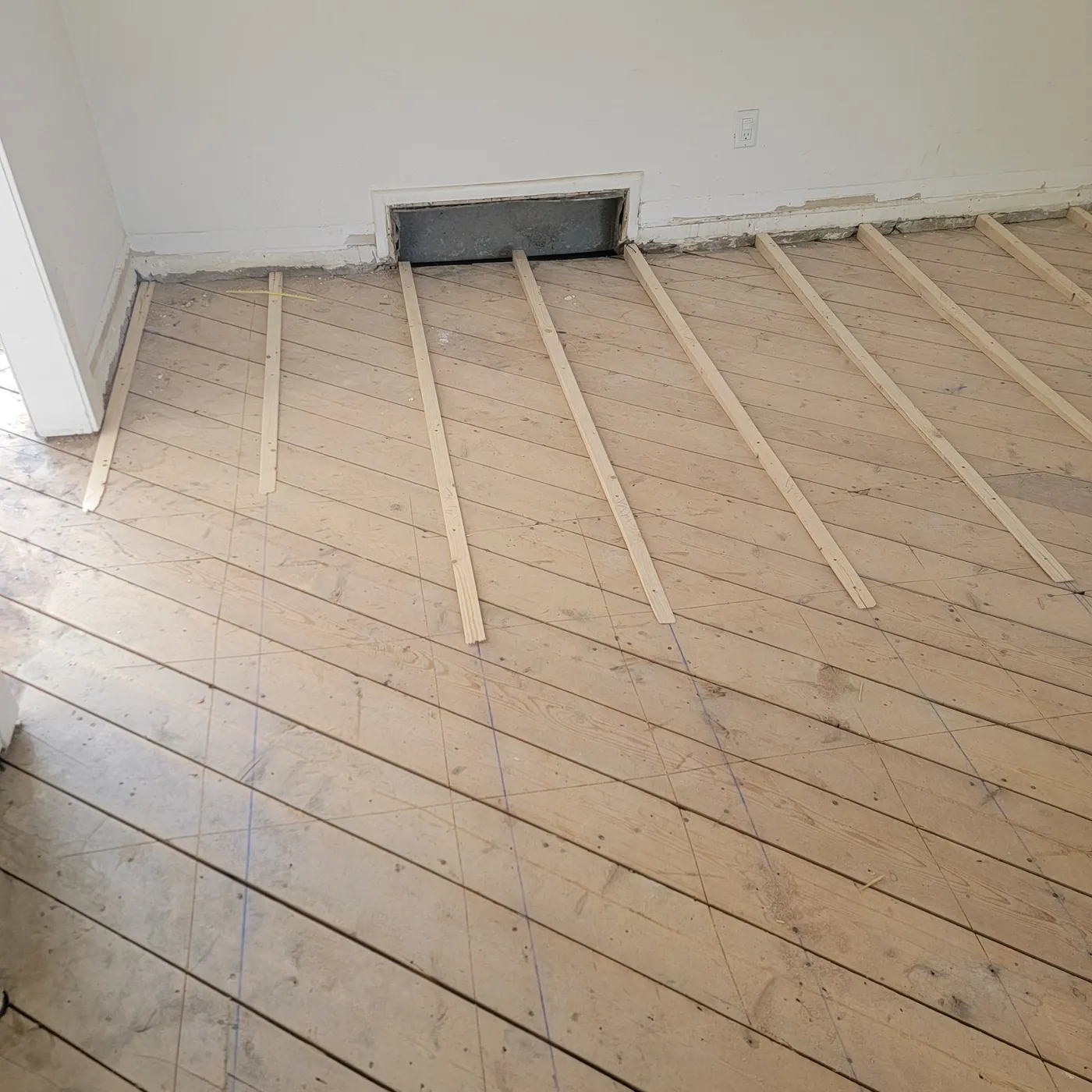
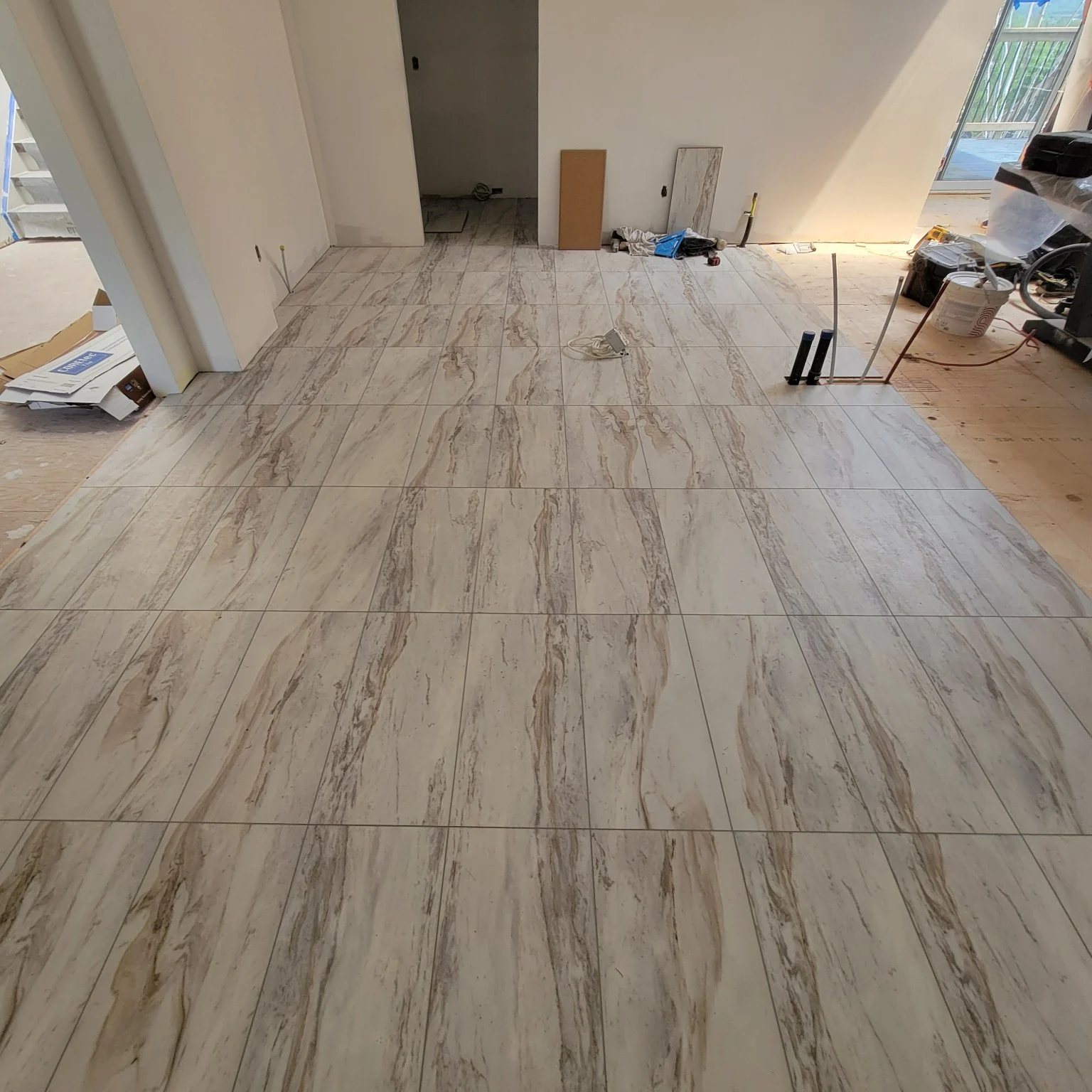
Even rigid planks need a flat base. Dips and humps cause joints to flex, click and eventually separate. They are corrected before installation.
Gaps, transitions and heavy items
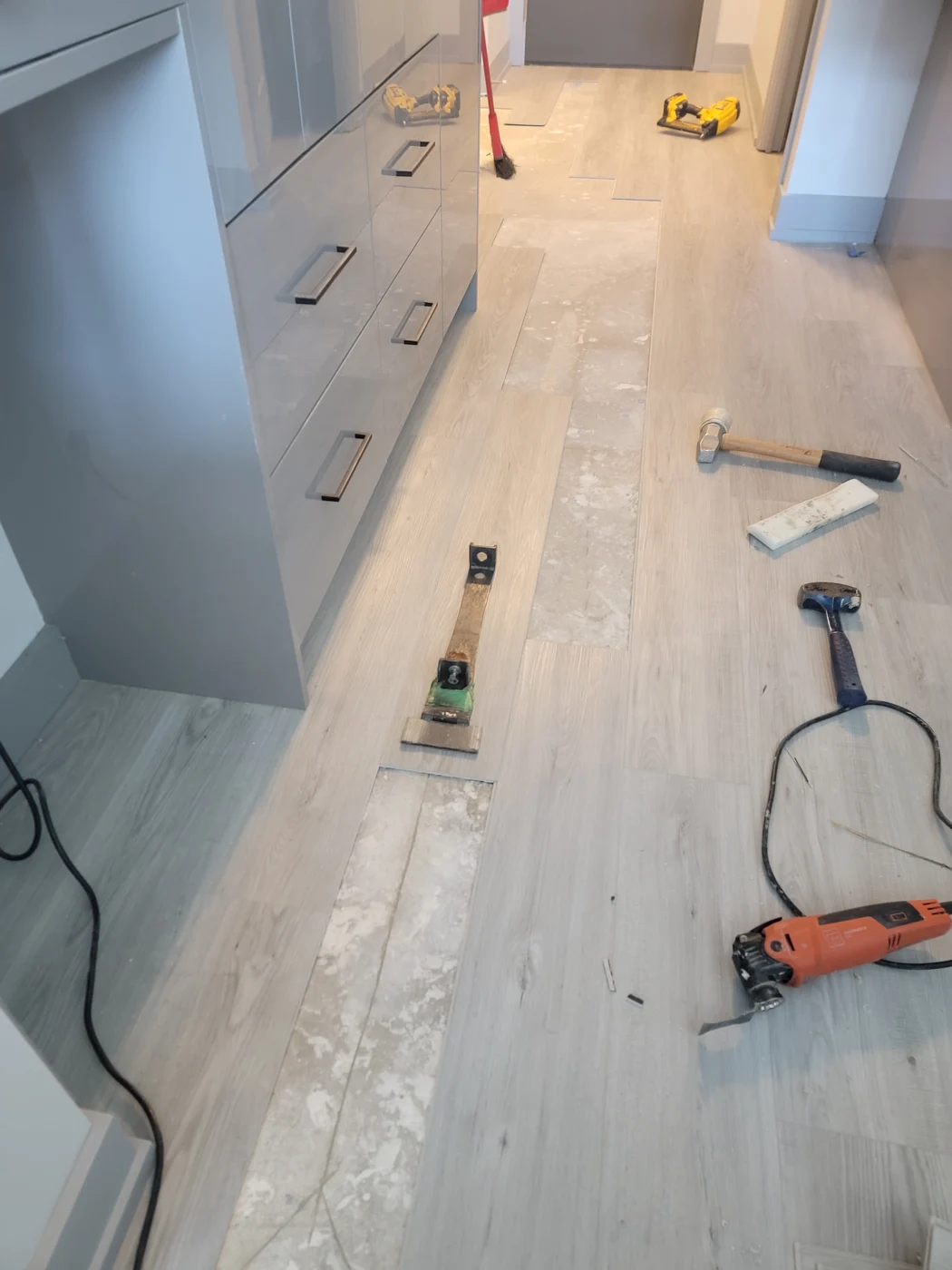
A floating vinyl floor still needs a small gap at the walls. Kitchen islands and cabinets are installed first, with the floor fitted around them, not on top.
Great for basements
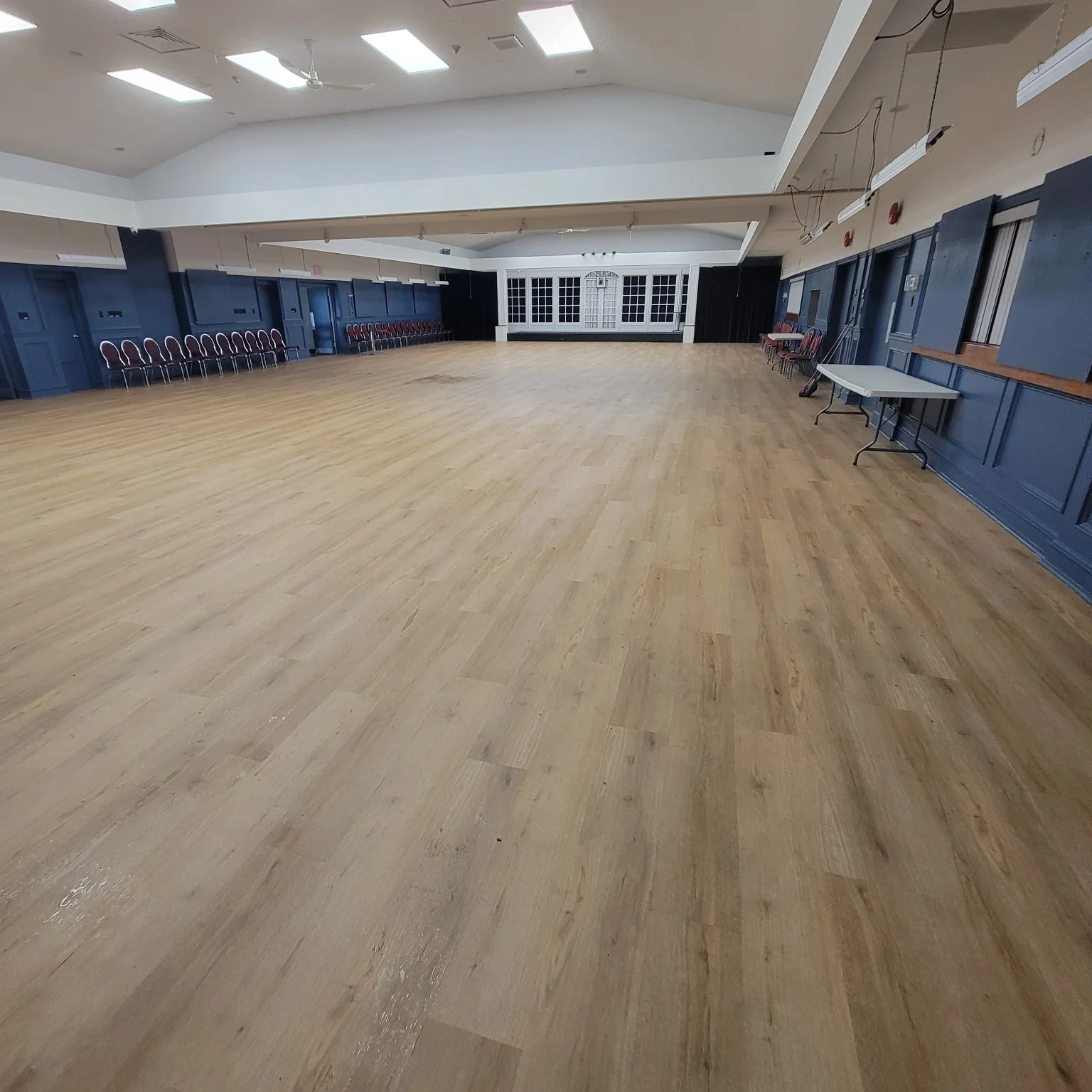
On a dry slab, click vinyl is a practical basement floor: warm, quiet and not damaged by occasional moisture the way wood can be.
Common questions
Do I need underlay under vinyl plank?
Only the type the manufacturer allows. Many planks have an attached pad, and adding a second soft underlay can void the warranty and damage the joints.
Can click vinyl go over tile?
Often yes, if the tile is flat and the grout lines are filled or the plank is rigid enough to bridge them.
Is LVP good for stairs?
Vinyl can be used on stairs with matching stair nosings, but each step needs to be glued and finished carefully.
Planning this for your home?
Send your city, rough measurements and a few photos. We will tell you which method suits your floor or stairs and give you an estimate after a visit.