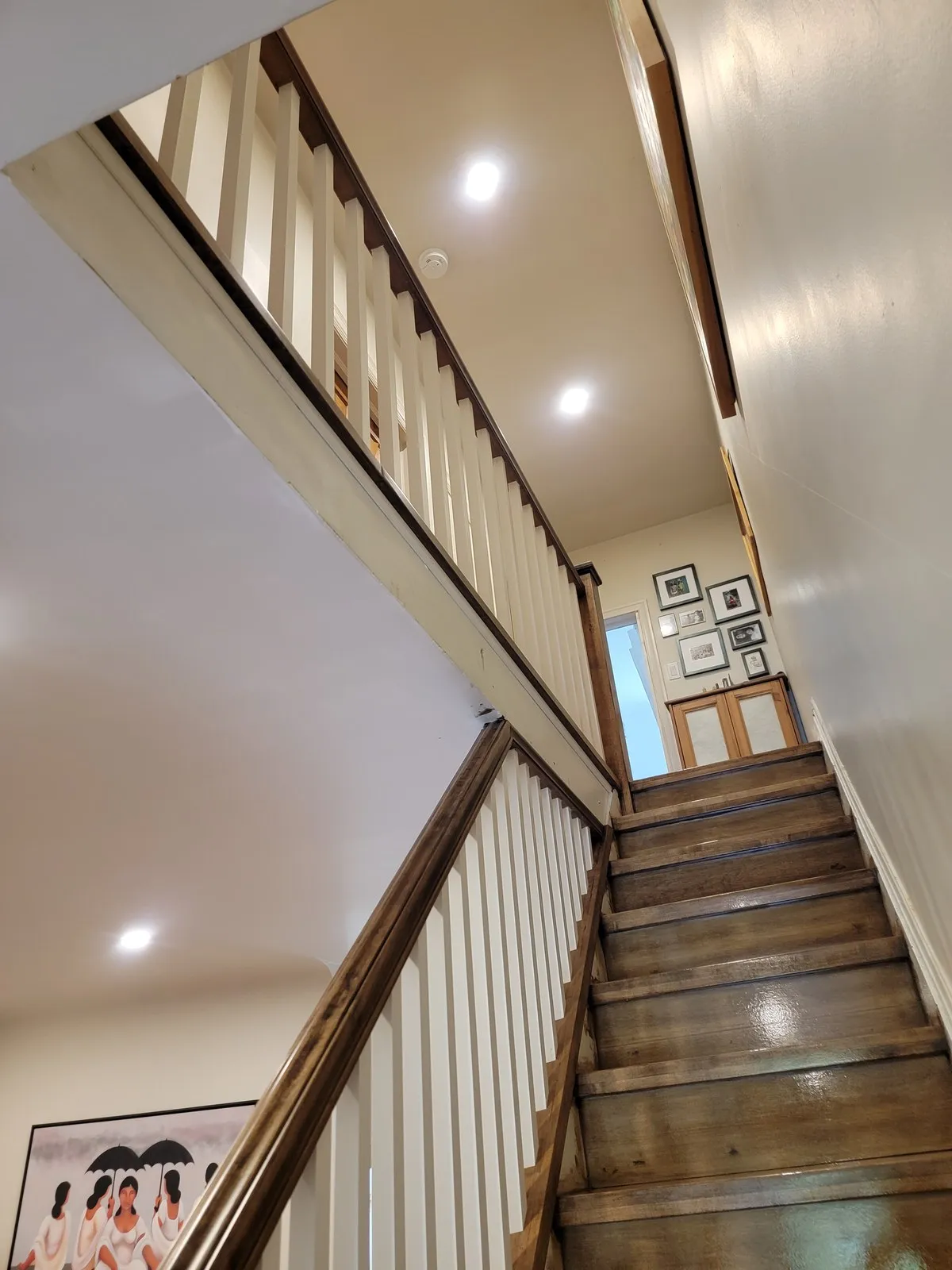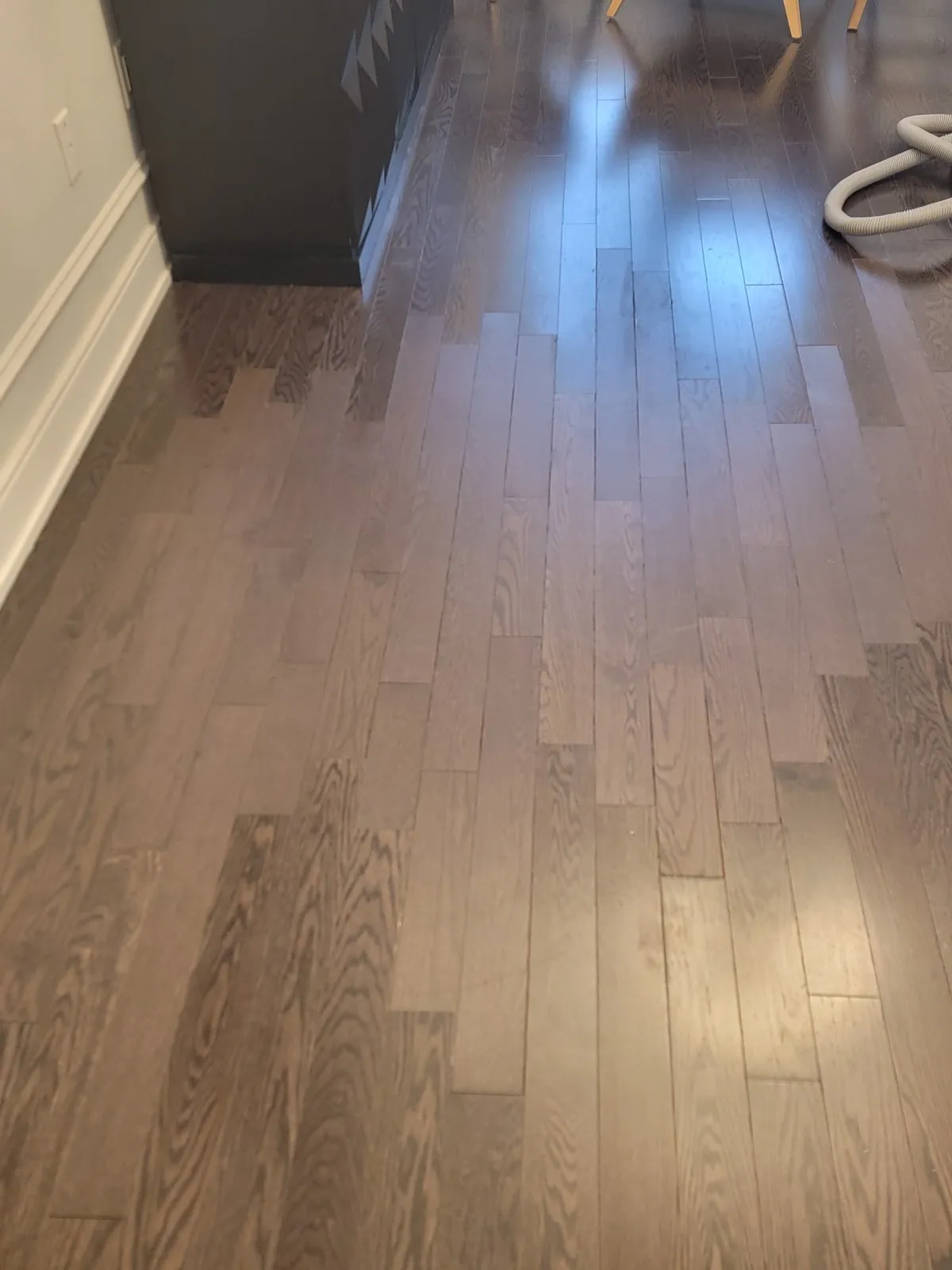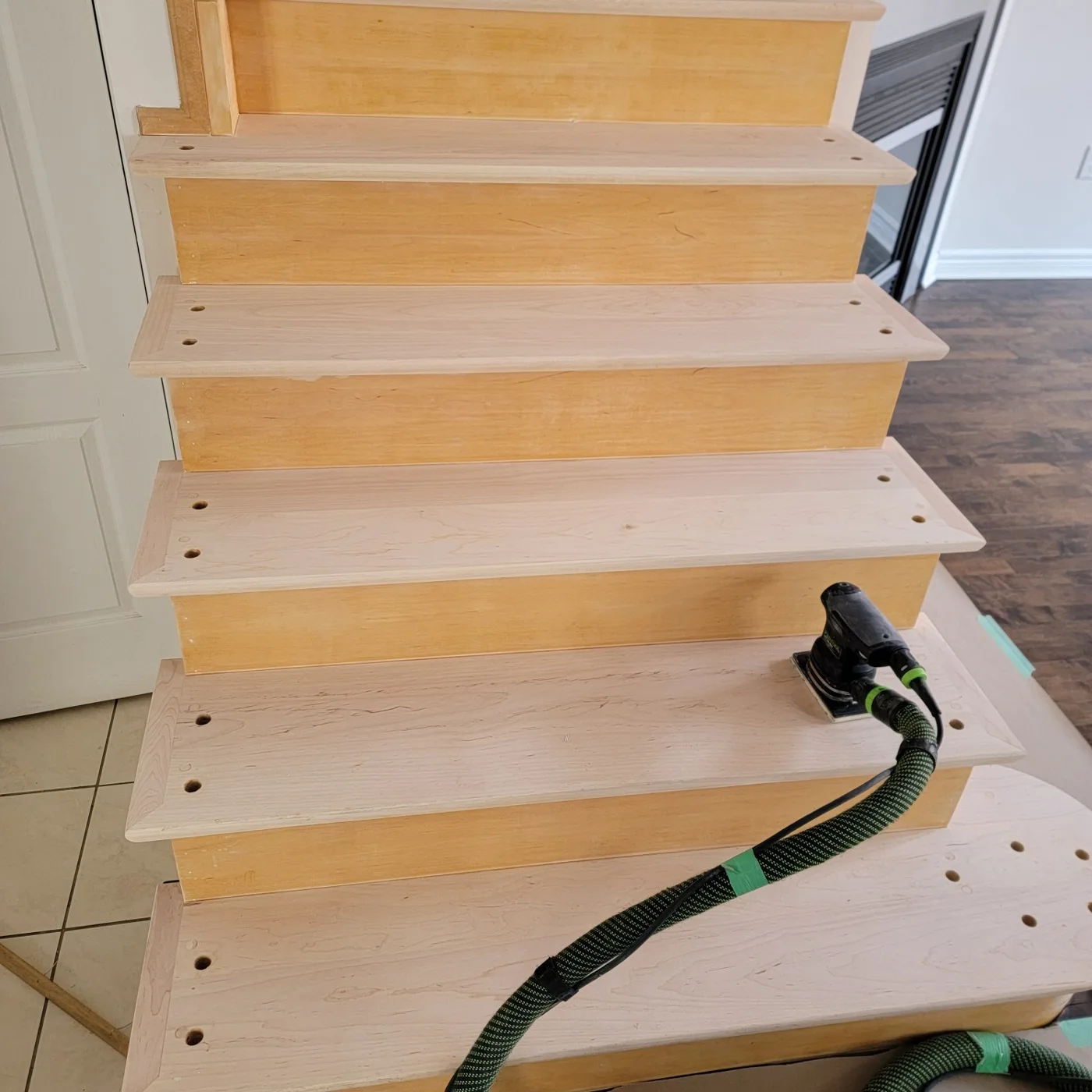
How dust extraction works
Each sander is connected by a hose to a dust extractor with a fine filter. The pad has holes that pull the dust away as it is made, before it can rise into the air. Very little escapes into the room.
What it means in your home
In most homes there is no need to wrap the whole house in plastic or move every piece of furniture out of nearby rooms. The air stays clear, and cleanup at the end of the day is quick.
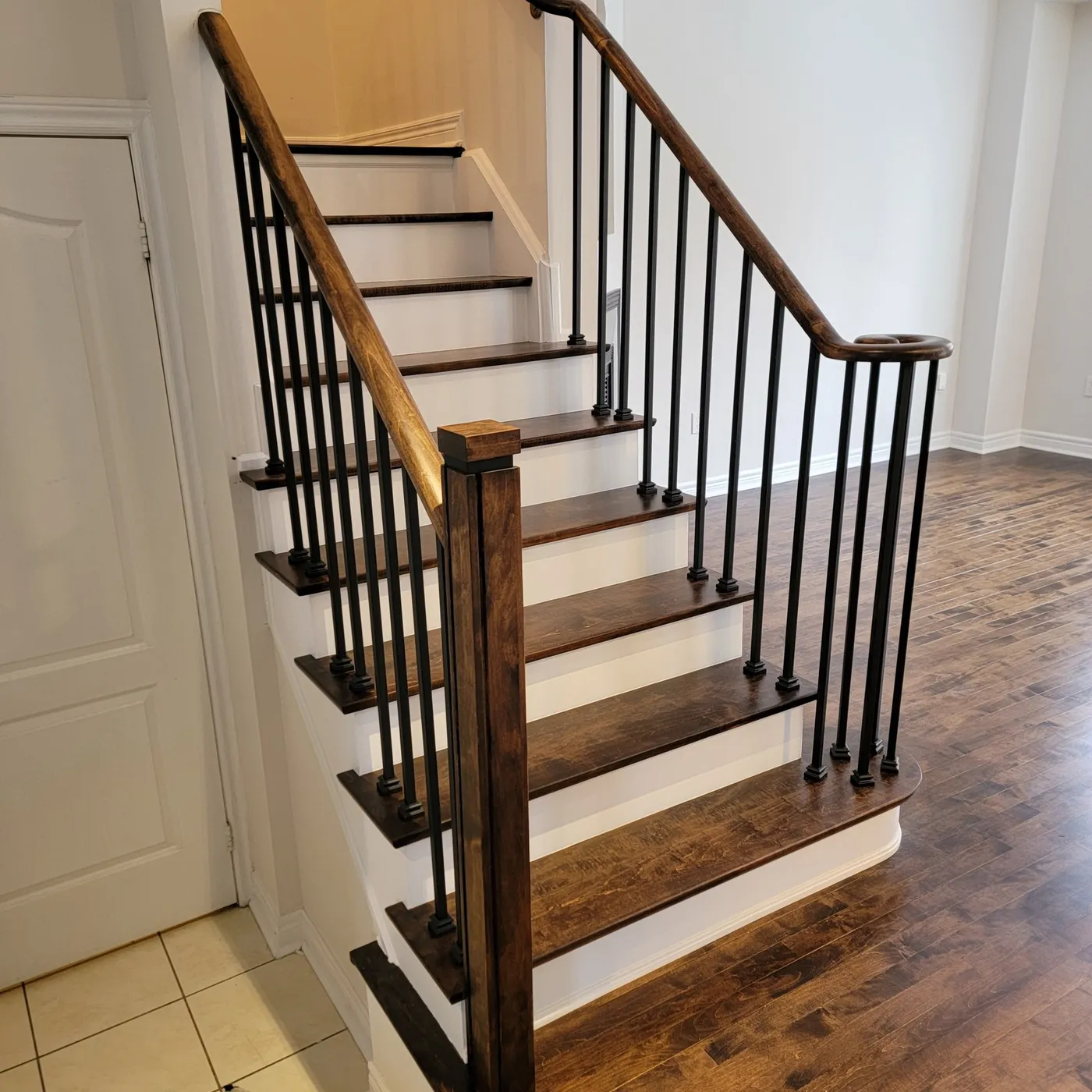
Better finish, too
Dust is the enemy of a smooth finish. When less dust is in the air, less of it lands in the wet stain and varnish, so the final coat is cleaner and smoother.
Where we use it
Stair treads, risers, landings and handrails, floor edges and corners, repaired areas and small rooms. Large floor areas are sanded with floor machines that also have dust collection.
Common questions
Is the sanding completely dust-free?
No sanding is 100 percent dust-free, but with extraction the dust is minimal and most homeowners are surprised how clean the house stays.
Do I need to leave home during sanding?
Usually not. Staining and finishing have odours and drying times, so we plan access to the stairs and rooms with you.
Do I need to cover furniture?
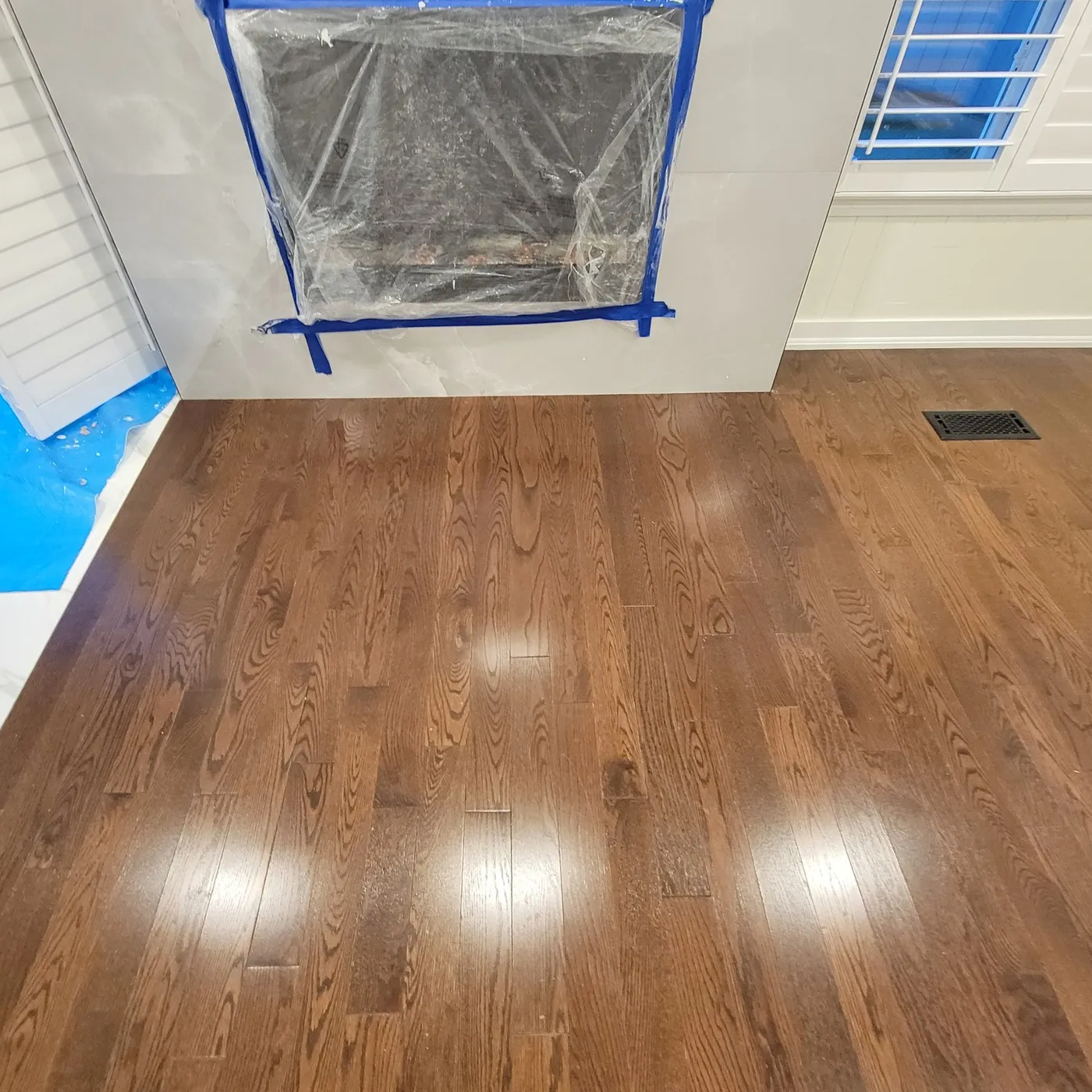
In most cases nearby furniture stays clean. We protect floors and areas next to the work as standard.
Planning this for your home?
Send your city, rough measurements and a few photos. We will tell you which method suits your floor or stairs and give you an estimate after a visit.