Sanding
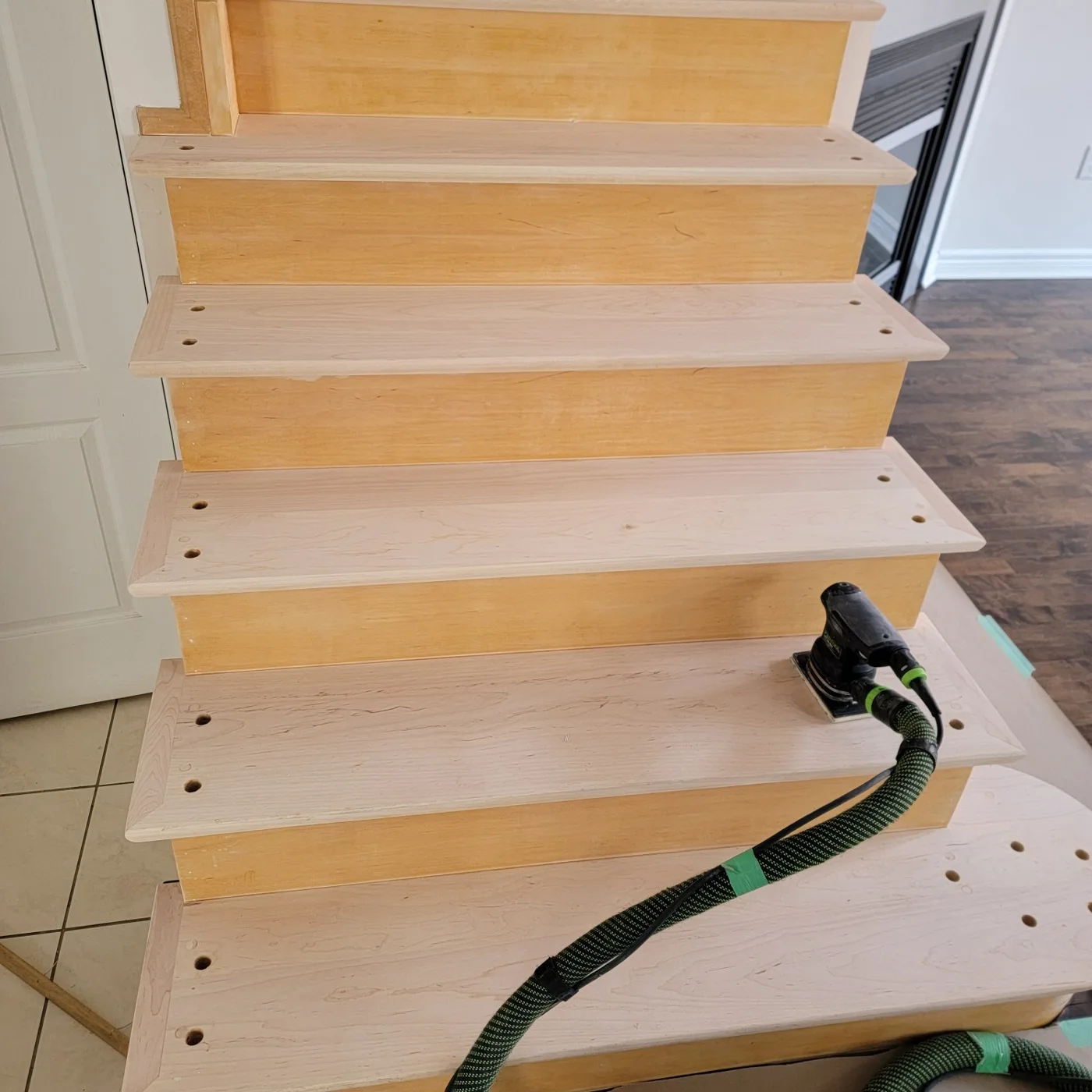
Each tread and riser is sanded by hand and with small sanders, because large floor machines do not fit on steps. The nosings, corners and edges against the stringers are detailed carefully so the colour takes evenly.
Choosing a stain
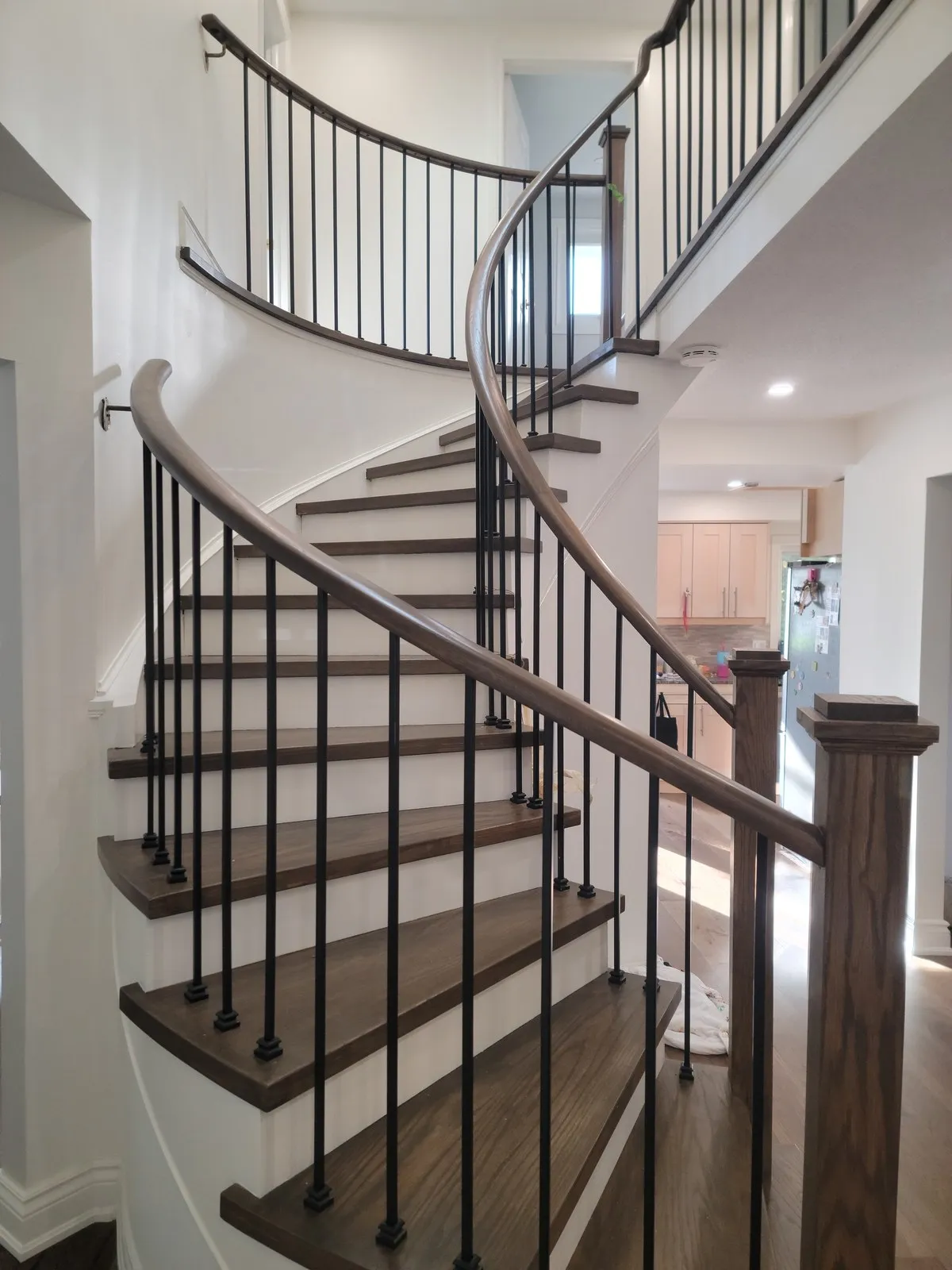
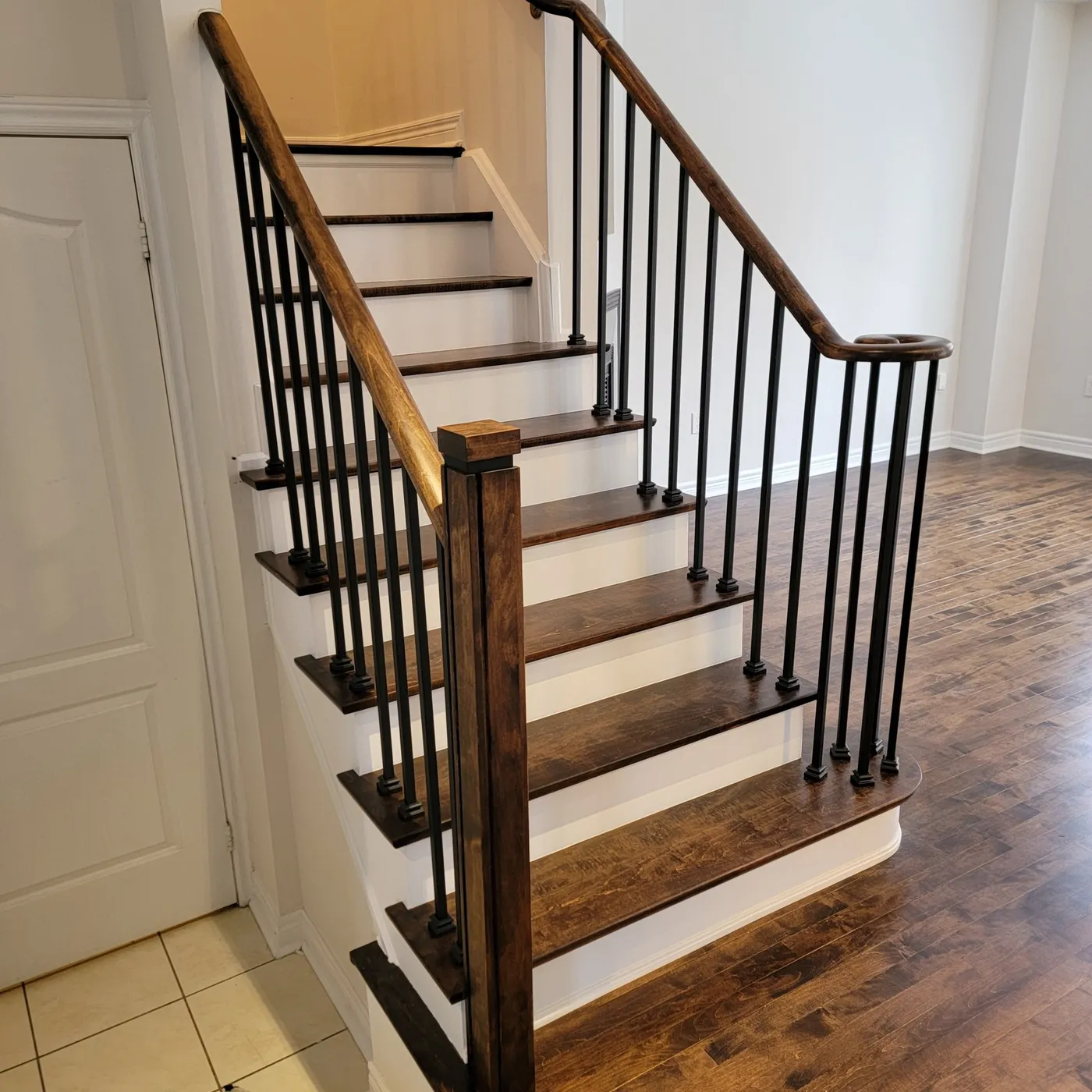
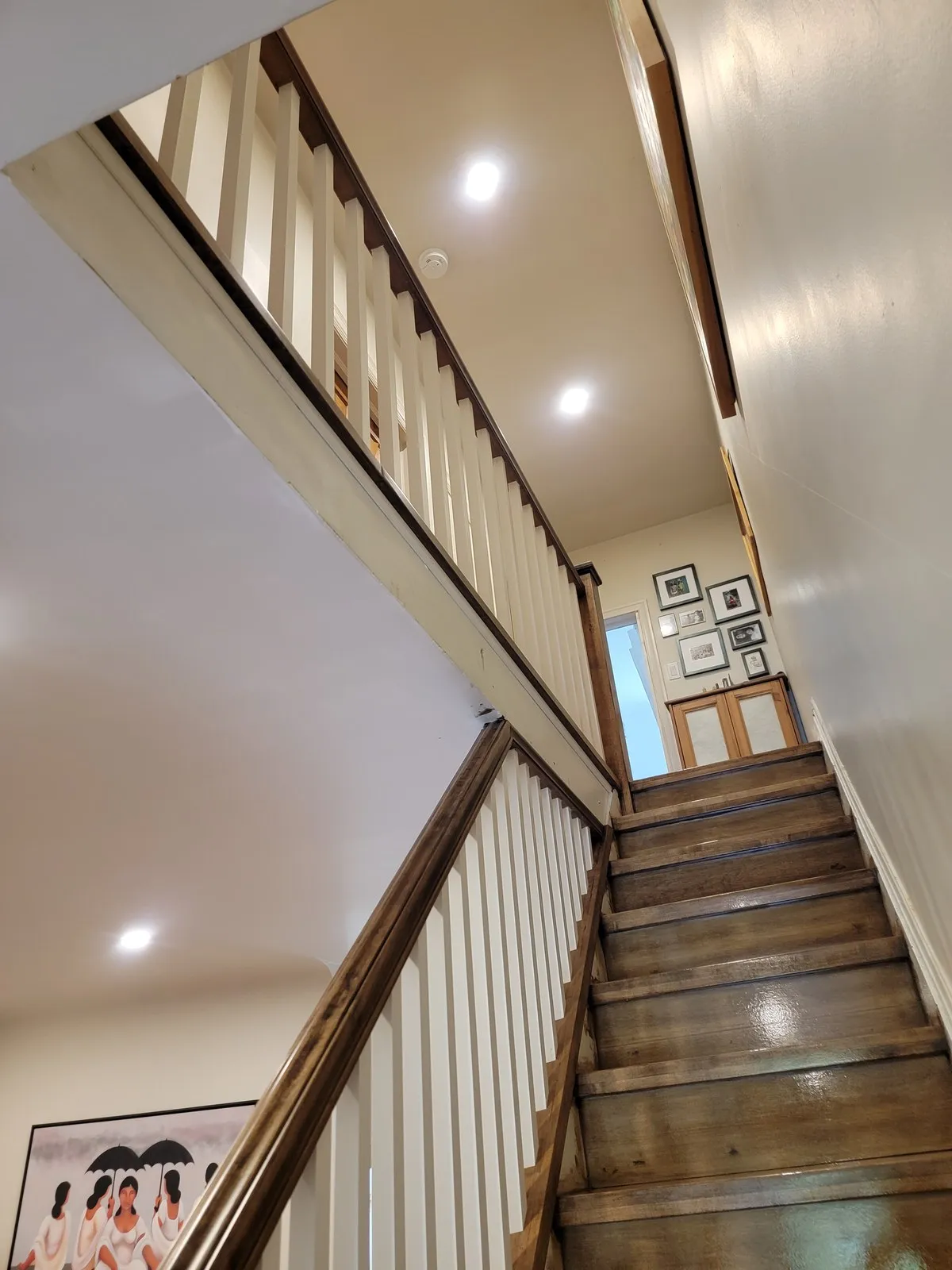
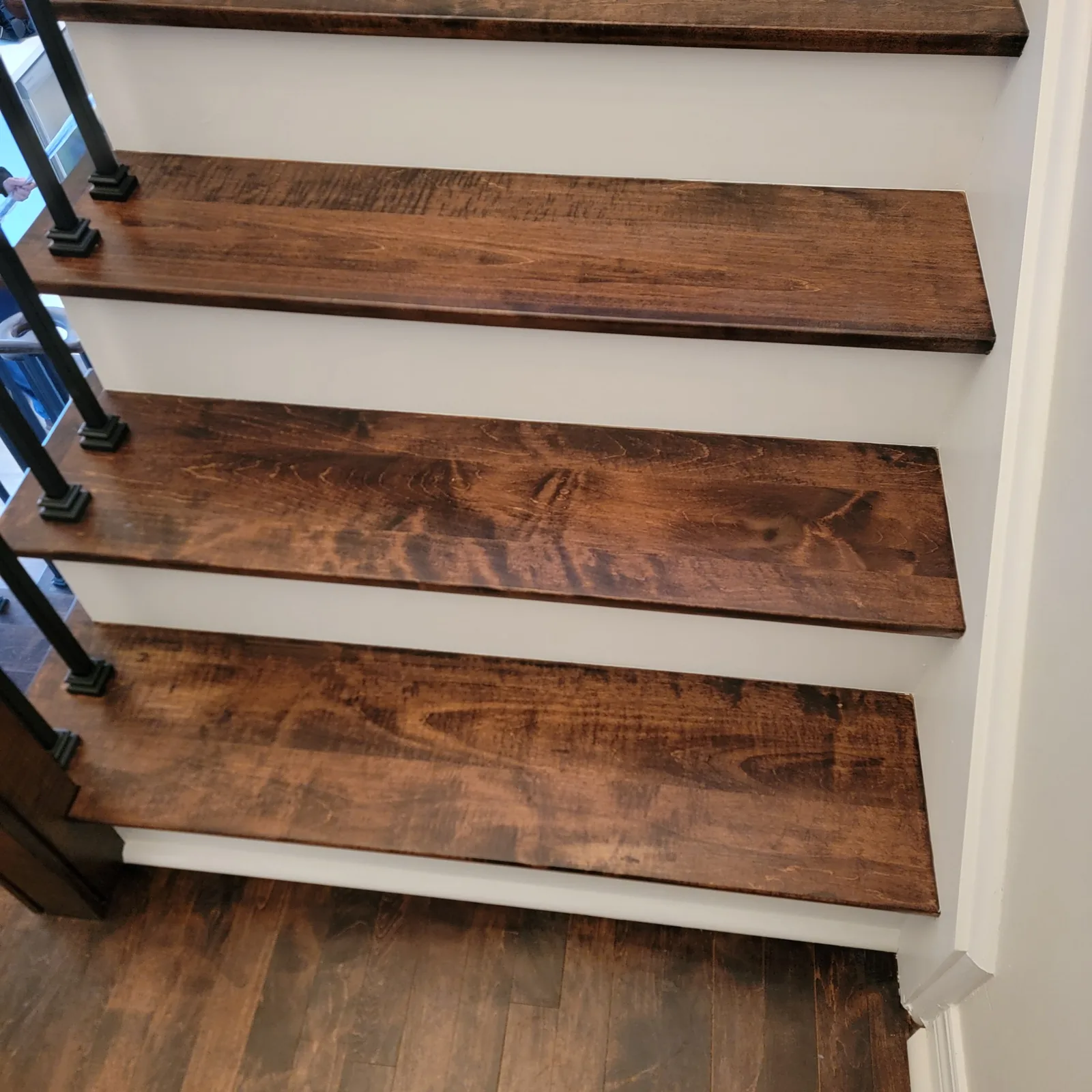
Oak takes stain well. Sample colours are applied on the actual stairs so you see them on your wood and lighting. A popular look is dark stained treads with white painted risers.
Varnish and finish
Several coats of polyurethane protect the stairs. Water-based finishes dry fast and stay clear. Oil-based finishes add an amber tone. Sheen can be matte, satin or semi-gloss to match the floors.
Using the stairs during the work
Stairs can often be finished in alternating steps so you can still go up and down. Plan for limited use for a few days while coats dry and cure.
When refinishing is not enough
Pine, plywood or builder-grade treads that were meant to be carpeted, or treads that are cracked, are better covered with new hardwood treads, called recapping.
Common questions
How long does stair refinishing take?
Usually a few days, depending on the number of steps, the stain and the number of finish coats.
Can I change the colour of my oak stairs?
Yes. Oak can be stained lighter-looking neutral tones, grey, brown or very dark. Going much lighter than natural oak is limited.
Can stairs match the new floors?
Yes. Stain samples are made to match the floor colour as closely as possible.
Planning this for your home?
Send your city, rough measurements and a few photos. We will tell you which method suits your floor or stairs and give you an estimate after a visit.